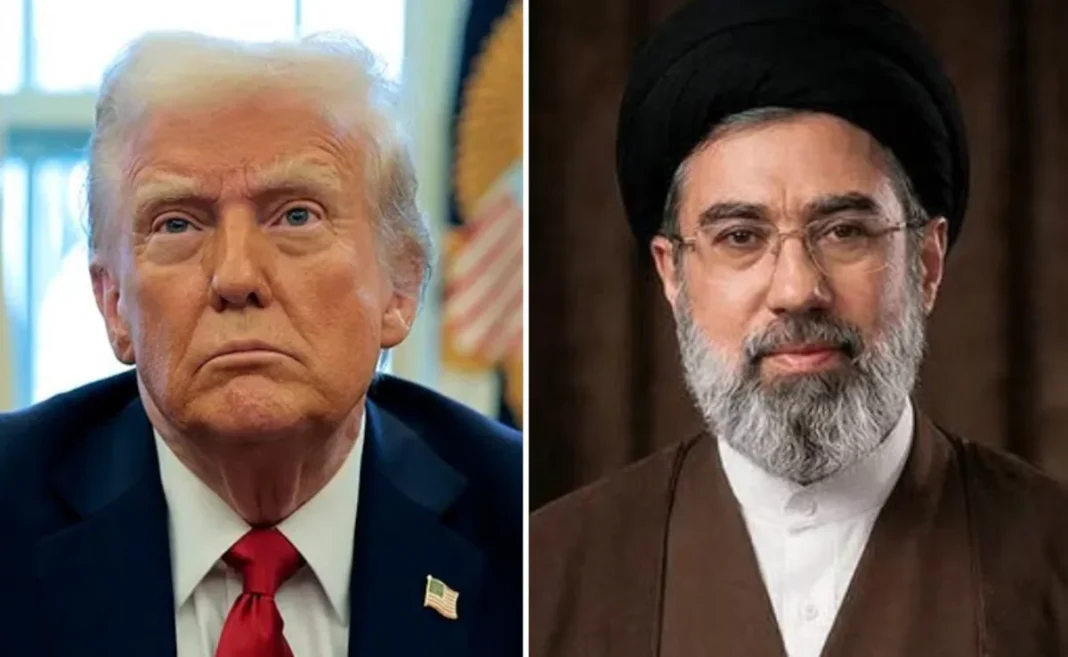


A deadline was set. Warnings were issued. Military escalation seemed inevitable. When Donald Trump delivered his ultimatum to Iran, the global narrative was already written in anticipation: a confrontation was coming, and it could reshape the Middle East. The world watched closely as tensions rose around the strategically vital Strait of Hormuz, a narrow waterway that silently carries a significant portion of the world’s oil supply.
But then something unexpected happened. Instead of escalation, there was a pause. Instead of strikes, there was a ceasefire. Instead of a decisive victory, there was ambiguity.
This is exactly where the debate of Did Iran Actually Win begins. In a conflict where the stronger power issued the ultimatum but stepped back before the deadline, and the weaker power did not fully surrender, who actually won? Understanding whether Iran gained a strategic advantage or whether the United States achieved its objectives requires looking beyond headlines and into the mechanics of modern geopolitical strategy.
The Illusion of Power: When Strength Doesn’t Guarantee Control
In traditional warfare, power is measured in military strength, technological superiority, and economic influence. By those metrics, the United States holds a clear advantage. Its global military presence, advanced weapon systems, and economic leverage make it one of the most dominant forces in modern history. Yet, this situation demonstrated a different reality. Power does not always translate into control over outcomes.
The ultimatum issued by Washington was designed to force compliance. It tied Iran’s actions directly to the threat of large-scale consequences, placing immense pressure on Tehran to respond quickly. However, instead of immediate submission, Iran chose a more calculated approach. By neither outright rejecting nor fully accepting the demands, it created space for negotiation without appearing weak.
This is where the dynamics shift. When a stronger power is forced to adjust its timeline or soften its stance, even slightly, it signals that control is not absolute. In geopolitics, perception often matters as much as action. The fact that the deadline did not lead to immediate escalation introduced doubt into what initially appeared to be a one-sided equation.
Iran’s Strategy: Resistance Without Escalation
Iran’s response to the crisis reflects a long-standing strategic pattern. Rather than engaging in direct confrontation, it often relies on calibrated resistance. This involves maintaining a posture of defiance while avoiding actions that could trigger overwhelming retaliation.
In this case, Iran’s partial compliance regarding maritime access and its willingness to engage in temporary arrangements allowed it to navigate the situation carefully. It did not fully concede to the demands, preserving its domestic narrative of resistance, while simultaneously avoiding the catastrophic consequences of open conflict.
This balancing act is critical. A complete refusal could have justified immediate military action. A complete surrender could have undermined internal political legitimacy. By positioning itself between these extremes, Iran maintained both strategic flexibility and narrative control.
The Ceasefire: Tactical Pause or Strategic Outcome?
The ceasefire that followed the ultimatum is at the center of this debate. On the surface, it appears to be a de-escalation, a temporary halt that allows both sides to step back. But beneath that surface lies a more complex reality.
For the United States, the pause can be interpreted as a calculated move to avoid immediate conflict while still maintaining pressure. By achieving partial compliance, particularly regarding the reopening of critical trade routes, Washington could argue that its strategy worked. The objective was not necessarily war, but leverage.
For Iran, however, the ceasefire serves a different purpose. It demonstrates that it can withstand pressure without collapsing. It shows that even under threat, it can negotiate on its own terms. This is not a conventional victory, but it is not a defeat either.
The result is a situation where both sides can claim success, and yet neither has achieved a decisive outcome. This is the hallmark of modern geopolitical conflicts, where clarity is often replaced by strategic ambiguity.
The Strait of Hormuz: The Real Battlefield
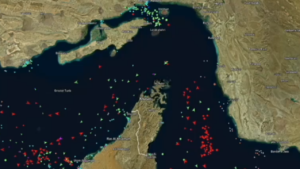
While military forces and political statements dominate headlines, the true center of this conflict lies in the Strait of Hormuz. This narrow passage is not just a geographic feature; it is a global economic artery. Any disruption here has immediate consequences for energy markets, trade flows, and economic stability.
By linking its ultimatum to this chokepoint, the United States effectively elevated the stakes of the conflict. It transformed a bilateral dispute into a global concern. Countries dependent on energy imports, including India, found themselves directly affected by the possibility of escalation.
Iran, on the other hand, understands the leverage this location provides. Control over or influence on this route allows it to exert pressure far beyond its immediate region. In this sense, the Strait itself becomes a strategic asset, shaping decisions on both sides.
Global Reactions: Markets, Diplomacy, and Strategic Silence
The international response to the ceasefire was cautious and calculated. Markets reacted quickly, with oil prices reflecting both relief and uncertainty. Investors recognized that while immediate conflict had been avoided, the underlying tensions remained unresolved.
Diplomatically, major powers called for restraint, emphasizing the need for dialogue over confrontation. However, there was also a noticeable absence of strong intervention. This reflects a broader trend in global politics, where nations are increasingly cautious about direct involvement in complex regional conflicts.
For countries like India, the situation required careful navigation. Balancing relationships with both the United States and Iran, while safeguarding economic interests, becomes a delicate exercise in strategic diplomacy.
Who Really Won? The Complexity of Modern Victory
The question of victory in this scenario does not have a simple answer. If victory is defined as achieving immediate objectives, the United States can claim success in securing partial compliance and avoiding disruption to global trade routes. If victory is defined as resisting pressure without capitulation, Iran can claim that it stood firm and preserved its strategic position.
However, modern conflicts rarely produce clear winners. Instead, they produce outcomes that reflect a balance of interests, compromises, and ongoing tensions. In this case, both sides achieved something, but neither achieved everything.
This is where the concept of strategic survival becomes important. For Iran, avoiding destruction while maintaining autonomy is itself a form of success. For the United States, maintaining influence and preventing escalation is equally significant.
A New Kind of Warfare: Pressure Without War

This situation highlights a broader transformation in how conflicts are conducted. Traditional warfare, characterized by direct military engagement, is increasingly being replaced by strategies that rely on pressure, leverage, and controlled escalation.
Economic sanctions, diplomatic isolation, military positioning, and public messaging all play a role in shaping outcomes without necessarily leading to open conflict. This approach allows nations to pursue objectives while minimizing the risks associated with full-scale war.
However, it also creates a constant state of tension, where conflicts remain unresolved and can reignite at any moment.
Conclusion: Victory, Survival, or Something In Between?
The ceasefire between the United States and Iran does not mark the end of a conflict. It marks a pause in an ongoing strategic contest. Whether Iran “won” depends on how victory is defined, and in modern geopolitics, that definition is constantly evolving.
What is clear is that this episode reflects a shift in global power dynamics. Strength alone is no longer enough to guarantee outcomes. Strategy, perception, and timing play equally critical roles.
In the end, this was not a story of victory or defeat. It was a story of calculated moves, controlled risks, and a world that continues to navigate the fine line between conflict and stability.
TEJWAS POV
At TEJWAS, we don’t see this as a win for either side. We see it as proof that modern power is no longer about who strikes first, but who controls the situation without striking at all. And in that game, both sides walked away… but neither walked away unchanged.
For sharp, no-BS geopolitical breakdowns that actually make you think — follow TEJWAS.
💬 Drop your take: Did Iran win, or was this always the US strategy?
Also see-