
Strategic Context
As tensions escalate across the Middle East between the United States, Israel, and Iran, the Indian Ocean has quietly emerged as an important strategic theatre. In a development that highlights India’s careful balancing act in global geopolitics, New Delhi provided safe harbour and assistance to an Iranian naval vessel just days before the United States sank Iran’s IRIS Dena warship during the ongoing conflict.
The sequence of events underscores India’s maritime responsibility in the region while also reflecting the complex diplomatic environment surrounding the widening US-Iran confrontation.
What Happened

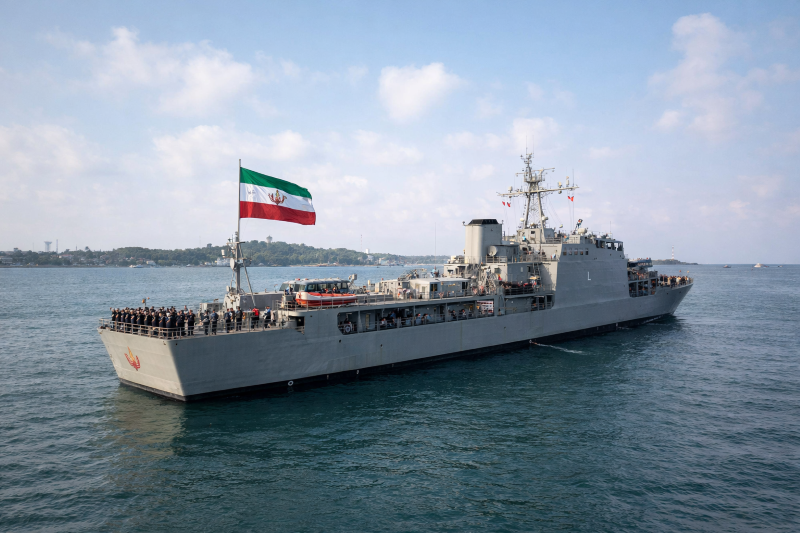
Reports indicate that an Iranian naval ship faced technical distress in waters near Sri Lanka shortly after participating in a multinational naval exercise involving several countries, including India. Responding to the emergency, the Indian Navy dispatched assistance and offered safe harbour to the vessel.
Indian authorities helped stabilize the situation and ensured the safety of the Iranian crew. Tehran later publicly thanked India for its swift response and maritime cooperation.
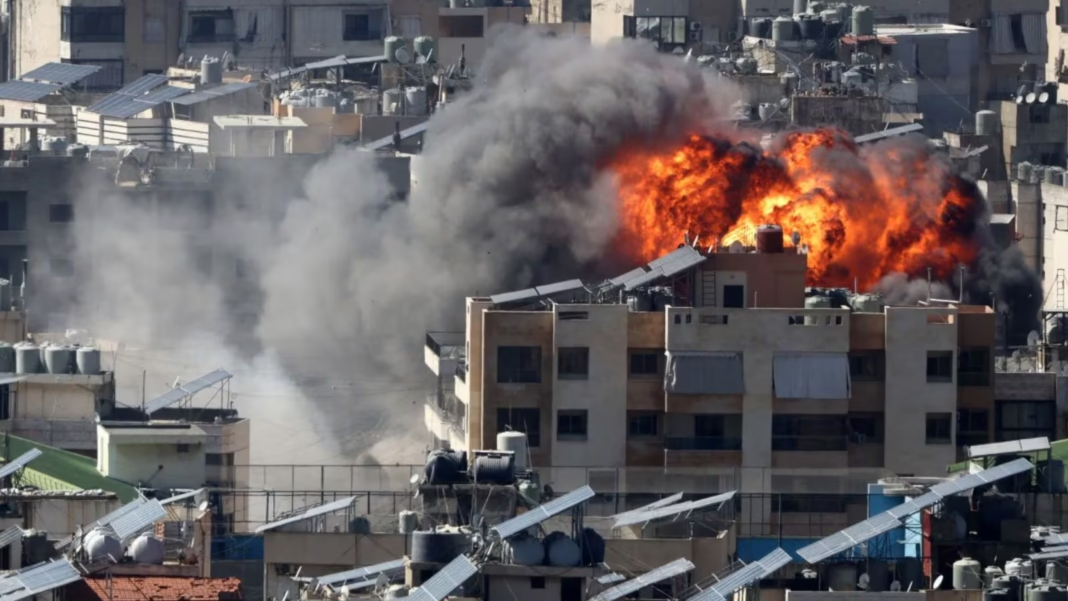
However, only days later, the geopolitical landscape shifted dramatically. During escalating hostilities in the region, US forces reportedly targeted and sank the Iranian IRIS Dena warship, a modern Iranian Navy destroyer that had been operating in regional waters.
The incident marks one of the most serious naval losses for Iran in recent years and signals a sharp escalation in the maritime dimension of the US-Iran conflict.
Why It Matters
The contrasting events highlight three critical dynamics shaping the region.
1. India’s Maritime Responsibility
India has consistently positioned itself as a net security provider in the Indian Ocean Region (IOR). Offering safe harbour to a distressed ship—regardless of nationality—aligns with international maritime norms and India’s humanitarian approach to naval operations.
This response reinforces India’s image as a responsible maritime power committed to safety and stability in regional waters.
2. Rising Militarization of the Indian Ocean
The sinking of the IRIS Dena signals that the US-Iran confrontation is no longer limited to the Persian Gulf. The conflict’s ripple effects are increasingly visible in the wider Indian Ocean, where global shipping lanes and strategic chokepoints are located.
For countries like India, this raises concerns about maritime security, energy routes, and regional stability.
3. India’s Diplomatic Balancing Act
India maintains important relationships with both Washington and Tehran. While the United States is a critical strategic partner, Iran remains significant for India’s energy security and connectivity projects such as the Chabahar port.
Providing assistance to an Iranian vessel demonstrates India’s commitment to humanitarian maritime norms without necessarily aligning with Iran politically.
Who Benefits and Who Risks

For Iran, India’s assistance offered a moment of diplomatic goodwill during a period of intense pressure.
For the United States, the destruction of the IRIS Dena represents a tactical blow to Iran’s naval capability and a signal of military dominance.
However, the broader risk lies in the potential spillover of the conflict into major global shipping routes. Increased naval confrontations could threaten commercial vessels operating in the region and disrupt international trade.
Long-Term Implications
The episode highlights how regional powers like India are increasingly drawn into the periphery of major global conflicts. Even humanitarian actions—such as rescuing a distressed vessel—carry diplomatic significance in a highly polarized geopolitical environment.
For India, the challenge will be maintaining strategic autonomy while ensuring stability in the Indian Ocean.As the US-Iran confrontation intensifies, the waters surrounding South Asia may become an even more critical arena for naval diplomacy, crisis management, and great-power competition.
Follow our page @tejwas_ for daily updates.
More from world;