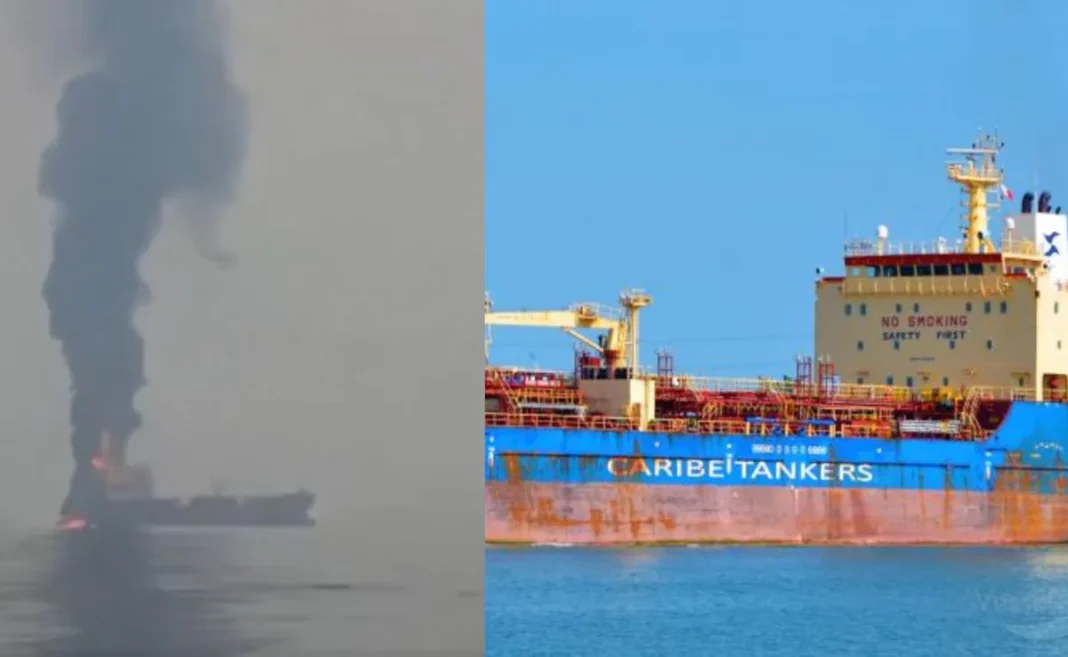


700 Kg Meth Seized in India as Agencies Crack Down on Maritime Drug Trafficking
India’s security agencies have dealt a major blow to international narcotics trafficking networks after recovering nearly 700 kilograms of methamphetamine and arresting eight Iranian nationals in a coordinated maritime operation.
The operation was carried out jointly by the Narcotics Control Bureau (NCB), Gujarat Anti-Terrorism Squad (ATS), and the Indian Navy, highlighting the growing coordination between India’s law enforcement and military forces to counter transnational organized crime in the Arabian Sea region.
The seizure is among the largest methamphetamine recoveries in recent years, underscoring the scale of drug trafficking routes that pass through the Indian Ocean.
How the Operation Unfolded

According to officials, the intelligence-led operation targeted a suspicious vessel operating in waters off India’s western coastline. Based on actionable intelligence, agencies tracked the vessel suspected of carrying narcotics intended for distribution through regional networks.
The Indian Navy assisted in intercepting the vessel at sea, after which law enforcement teams boarded and conducted a thorough search.
During the operation, authorities discovered approximately 700 kilograms of methamphetamine, commonly known as “meth” or “crystal meth.”
The eight individuals on board were identified as Iranian nationals and were taken into custody for interrogation. Officials believe the crew was operating as part of a broader transnational smuggling network that exploits maritime routes across the Arabian Sea and Indian Ocean.
Why the Arabian Sea Has Become a Drug Trafficking Route

The Arabian Sea corridor has increasingly emerged as a major trafficking route for narcotics originating from regions connected to the Golden Crescent, which includes Afghanistan, Iran, and Pakistan.
Drug syndicates often use:
-
Fishing vessels
-
Cargo boats
-
Small maritime transport ships
to move narcotics across international waters before transferring them to secondary networks near coastal regions.Indian authorities have significantly increased maritime surveillance in recent years to counter such operations.Large seizures along India’s western coast—particularly in Gujarat—have revealed how traffickers attempt to use the region as a transit point for international drug distribution networks.
Strategic Importance of the Joint Operation
This operation highlights a new operational model in India’s counter-narcotics strategy: integrating intelligence agencies, law enforcement, and military assets.
Key elements that made the operation successful include:
-
Intelligence coordination between central and state agencies
-
Maritime interception capability provided by the Indian Navy
-
Operational execution by NCB and Gujarat ATS
Such coordination is increasingly necessary because modern drug trafficking networks operate across borders and maritime domains, making purely domestic law enforcement insufficient.
What Happens Next
Authorities are now conducting a detailed investigation to determine:
-
The origin of the narcotics shipment
-
The intended destination of the drugs
-
Possible links to international criminal organizations
-
Financial networks supporting the trafficking operation
Interrogations of the arrested individuals may provide critical leads about regional smuggling networks operating across the Middle East and South Asia.If confirmed, the seizure could expose a larger supply chain linking drug producers, maritime smugglers, and distribution networks across multiple countries.
Strategic Implications for India
The bust reinforces the importance of maritime security in India’s broader national security architecture.
Drug trafficking is often linked with terror financing, organized crime, and destabilizing activities, making such operations not just law enforcement victories but also strategic security successes.India has increasingly prioritized integrated coastal security, maritime domain awareness, and intelligence-led interdiction operations to counter threats emerging from the Indian Ocean region.As trafficking networks adapt to tighter land border controls, maritime routes are expected to remain a key battleground in the fight against transnational narcotics trade.
Follow our page @tejwas_ for daily updates.
More from world;