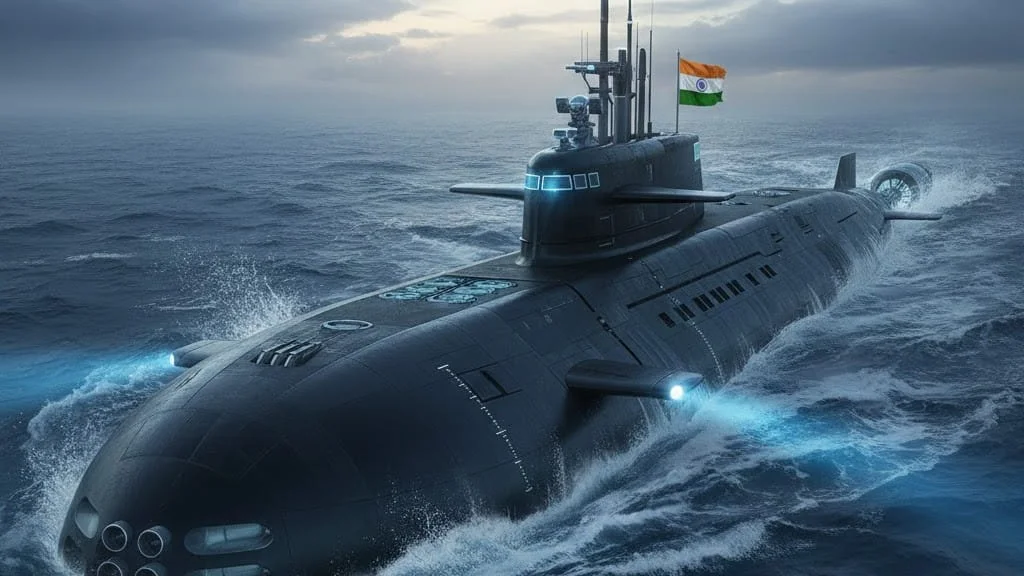


INS Vikrant 1000 Arrested Landings Milestone
Strategic Context
India’s first indigenous aircraft carrier, INS Vikrant, has achieved a major operational milestone by successfully completing 1,000 arrested landings. The achievement marks a significant step in strengthening the Indian Navy’s carrier aviation capability and maritime power projection in the Indo-Pacific region.
Arrested landings are among the most complex aviation maneuvers, where fighter aircraft land on a moving carrier deck and are rapidly halted using arrestor wires. Completing 1,000 such landings demonstrates that India’s newest carrier has reached a high level of operational maturity.The milestone also reflects the growing proficiency of Indian naval aviators and the increasing readiness of India’s carrier battle group concept.
What Are Arrested Landings?
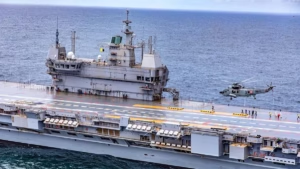
Carrier-based aircraft cannot land like conventional planes due to the short runway available on an aircraft carrier. Instead, they use a system called an arresting gear, where a hook attached to the aircraft catches a wire stretched across the deck.
Aircraft operating from INS Vikrant—including the MiG-29K—perform these arrested landings regularly during operational training and missions.
Each successful landing requires:
-
Precise alignment with the carrier deck
-
Accurate speed and descent control
-
Coordination with the carrier’s landing signal officers
Reaching 1,000 arrested landings indicates consistent operational deployment and training cycles aboard the carrier.
Why INS Vikrant Is Important

INS Vikrant represents a landmark achievement in India’s defence manufacturing ecosystem. Built domestically by Cochin Shipyard Limited under the government’s Aatmanirbhar Bharat initiative, the carrier symbolizes India’s growing capability to design and construct complex naval platforms.
Key features of INS Vikrant include:
-
Displacement of around 45,000 tonnes
-
Capability to operate fighter jets, helicopters, and surveillance aircraft
-
Integrated combat management and radar systems
-
Ability to support a carrier strike group in the Indian Ocean
With INS Vikrant operational alongside INS Vikramaditya, India currently operates two aircraft carriers, strengthening its maritime reach.
Strategic Importance for the Indo-Pacific

Aircraft carriers are central to modern naval strategy. They allow countries to project air power far from their shores, protect sea lanes, and support expeditionary missions.
For India, INS Vikrant enhances the ability to:
-
Maintain maritime dominance in the Indian Ocean
-
Monitor expanding Chinese naval deployments
-
Protect critical sea lines of communication
-
Respond quickly to regional crises and humanitarian missions
The operational maturity of Vikrant is particularly significant as China continues expanding its aircraft carrier fleet and naval presence in the Indo-Pacific.