


Strategic Context: Why the LoC Remains Volatile
The Indian Army foils infiltration bid along the Line of Control (LoC) in the Bhimber Gali sector, once again underlining the fragile security environment in Jammu and Kashmir. The LoC has historically been a flashpoint between India and Pakistan, especially in sectors like Bhimber Gali in the Poonch–Rajouri belt.
Despite the 2021 ceasefire understanding between India and Pakistan, infiltration attempts backed by Pakistan-based terror infrastructure continue. These attempts often spike ahead of seasonal shifts or major political and security developments in the region.Bhimber Gali remains strategically sensitive due to its terrain — dense forests, rugged hills, and proximity to known infiltration routes used by terror handlers across the border.
What Happened in Bhimber Gali?
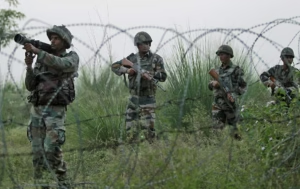
According to security sources, alert troops detected suspicious movement along the LoC in the Bhimber Gali sector. Acting swiftly, the Indian Army launched a counter-infiltration operation.The infiltration attempt was effectively foiled, with security forces neutralizing the threat before terrorists could penetrate deeper into Indian territory. Recovery operations reportedly yielded arms, ammunition, and survival supplies — indicating preparation for a sustained terror operation inside Jammu and Kashmir.Following the incident, security forces heightened alert levels across sensitive districts in Jammu and Kashmir, particularly in Rajouri, Poonch, and parts of the Kashmir Valley.
Why It Matters: The Broader Security Signal
The failed infiltration attempt is not an isolated incident. It reflects three broader trends:
1. Pakistan’s Proxy Strategy Continues
Despite diplomatic signaling of de-escalation, infiltration attempts show that Pakistan’s military establishment continues to rely on proxy actors to keep the Kashmir theatre active.
2. Shift Toward High-Impact, Small-Team Attacks
Recent patterns indicate smaller, well-trained groups attempting targeted attacks on security forces rather than mass-casualty urban strikes.
3. Pre-Summer Infiltration Window
Historically, snowmelt in forward areas opens infiltration routes. Terror groups often attempt to push operatives across before intensified surveillance and fencing upgrades become fully operational.
Who Benefits and Who Loses?
India’s Position:
India benefits from operational vigilance. Each successful counter-infiltration strengthens deterrence and signals improved surveillance, including night-vision systems, UAV monitoring, and multi-layered fencing.
Pakistan’s Calculus:
Repeated failures expose operational gaps and raise costs for handlers across the border. However, continued attempts suggest a long-term strategy of maintaining instability rather than achieving tactical success.
Local Stability in J&K:
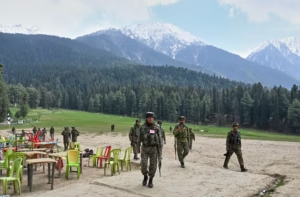
Heightened alerts may temporarily increase security presence, but preventing infiltration helps avoid larger terror incidents that disrupt civilian life and economic recovery.
Risks Ahead: Escalation and Hybrid Threats
The key risks include:
-
Retaliatory attempts through alternate sectors.
-
Hybrid militancy using locally radicalized elements.
-
Increased drone-based supply drops along the LoC and International Border.
-
Tactical escalation if infiltration attempts trigger cross-border firing incidents.
While ceasefire violations have reduced since 2021, infiltration attempts remain a core feature of Pakistan’s asymmetric approach.
Long-Term Implications for India’s Security Architecture
The incident reinforces the need for:
-
Persistent LoC surveillance upgrades.
-
Counter-drone integration.
-
Intelligence-led operations inside the hinterland.
-
Diplomatic signaling to maintain escalation dominance without triggering conventional conflict.
India’s evolving counter-infiltration grid — combining technology, human intelligence, and rapid response units — is increasingly central to stabilizing Jammu and Kashmir.