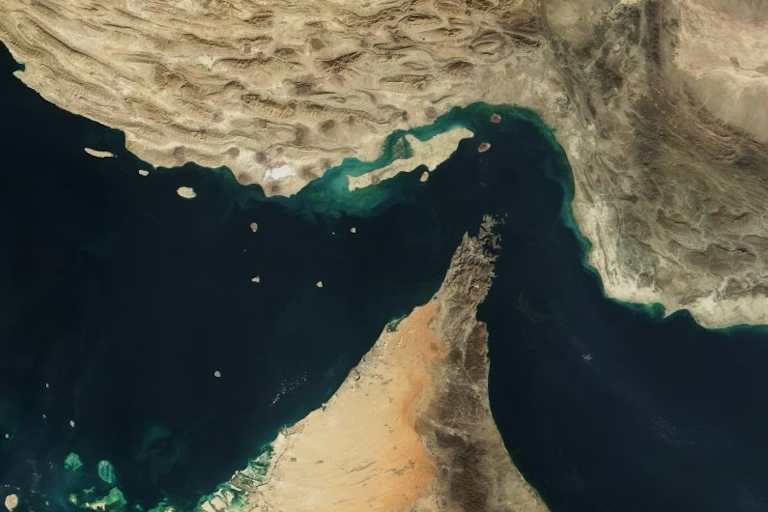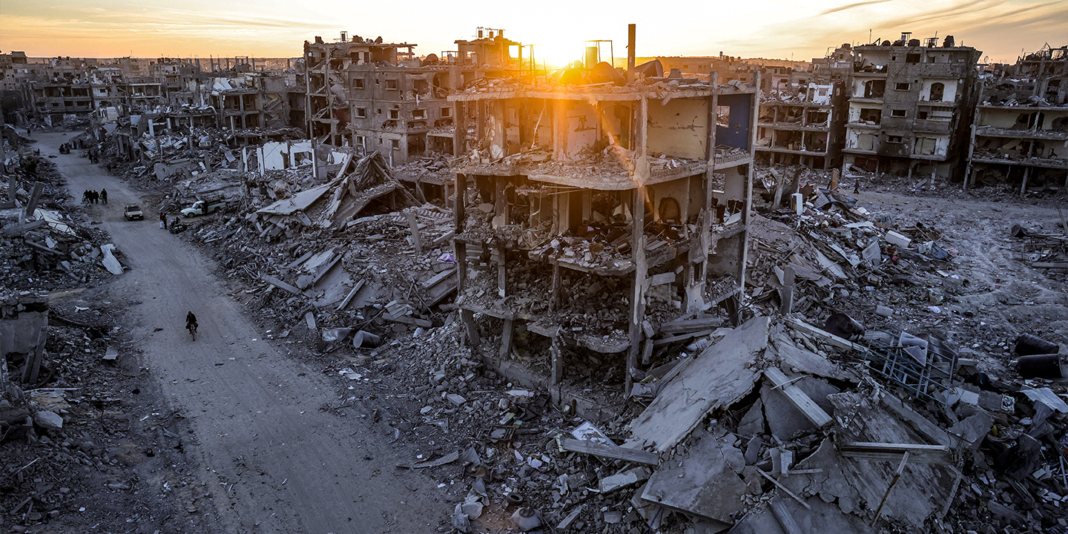

Red Sea Crisis is far from over, even if it has temporarily slipped out of daily headlines. While global attention has shifted toward other flashpoints, the situation in the Red Sea continues to impact shipping routes, global trade, and geopolitical stability.
This is not just a regional issue — it is a global one.
Red Sea Crisis — A Silent Disruption to Global Trade
The Red Sea is one of the world’s most important shipping corridors, connecting Europe to Asia through the Suez Canal.
- A significant portion of global trade passes through it
- It is critical for energy shipments
- It supports supply chains across continents
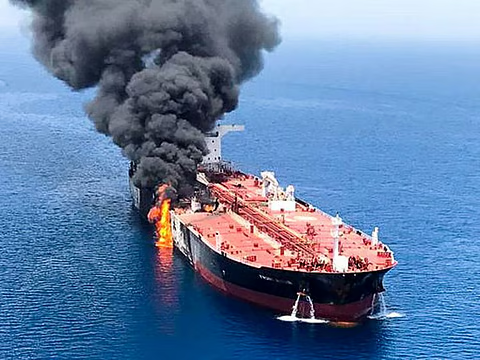
Because of ongoing tensions and attacks on vessels, many ships are now avoiding this route, choosing longer and more expensive alternatives.
Why the Red Sea Crisis Is Still Not Over
Despite reduced media coverage, the core issues remain unresolved:
- ongoing threats to commercial shipping
- military presence in the region
- geopolitical tensions involving multiple actors
These factors mean the crisis is not truly over — it is just evolving.
The Cost of Avoiding the Red Sea
One of the biggest impacts of the Red Sea Crisis is rerouting.
Ships are now traveling around Africa via the Cape of Good Hope, which leads to:
- longer travel times
- higher fuel costs
- increased shipping expenses
These costs eventually reach consumers through higher prices on goods.
Why This Matters to the Global Economy
The Red Sea is not just a route — it is a backbone of global trade.
When it is disrupted:
- supply chains slow down
- inflation pressure increases
- global markets react
This shows how a regional conflict can have worldwide consequences.
A New Pattern in Modern Conflict

Red Sea Crisis also reflects a larger trend.
Modern conflicts are no longer limited to land battles. They are targeting:
- shipping routes
- trade corridors
- economic systems
This turns global infrastructure into a battlefield.
Why Governments Are Concerned
Countries across the world are monitoring the situation closely.
Because:
- energy security depends on stable routes
- trade stability is at risk
- economic impact is immediate
This has led to increased naval presence and coordination in the region.
The Bigger Risk Ahead
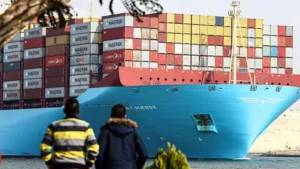
The biggest concern is escalation.
If tensions increase:
- shipping disruption could worsen
- global trade could slow further
- economic impact could deepen
This is why the Red Sea remains a key geopolitical hotspot.
Final Take
Red Sea Crisis is not over — it is simply less visible.
But its impact continues to shape global trade, energy flow, and economic stability. In 2026, understanding such silent disruptions is just as important as tracking major conflicts.
Because sometimes, the biggest global risks are the ones not making daily headlines.
Follow us on instagram @thetejwas.
Also see-