


From War to Data is not just a shift in strategy — it is a transformation in how conflicts are fought in 2026. While traditional warfare focused on territory, military bases, and physical destruction, modern conflicts are increasingly targeting something far more invisible yet powerful: digital infrastructure.
In today’s world, controlling data can be as impactful as controlling land.
From War to Data — The Evolution of Modern Conflict
For decades, war was defined by physical dominance. Armies captured cities, destroyed infrastructure, and fought for territory.
But now, the battlefield has expanded.
Modern conflicts are targeting:
- data centers
- cloud platforms
- communication networks
- digital financial systems
This shift reflects a simple reality — the world now runs on data.
Why Digital Infrastructure Has Become a Prime Target

Digital infrastructure is the backbone of modern society.
It powers:
- banking and financial systems
- government operations
- healthcare and emergency services
- global communication
Disrupting these systems can create immediate chaos without the need for traditional military engagement.
That is why From War to Data is becoming a defining trend in global conflict.
The Power of Disruption Without Destruction
One of the biggest advantages of targeting digital systems is that it allows disruption without visible destruction.
Instead of bombing infrastructure, attackers can:
- shut down services
- disrupt communication
- slow financial systems
- create confusion
This type of warfare is less visible but equally impactful.
Cyber Warfare and Strategic Advantage

Cyber operations are now a key part of geopolitical strategy.
Countries can:
- test vulnerabilities
- gather intelligence
- disrupt operations
without triggering full-scale war.
This creates a new kind of battlefield where actions are often hidden, but consequences are global.
How This Impacts Everyday Life
From War to Data is not just about governments or militaries — it directly affects people.
When digital systems are targeted:
- payments can fail
- services can go offline
- communication can be disrupted
- businesses can slow down
This means civilians are now directly impacted by digital conflict, even if they are far from physical war zones.
The Global Risk of Interconnected Systems
One of the biggest challenges is that the world is highly interconnected.
A disruption in one region can:
- affect global businesses
- impact international markets
- disrupt cross-border communication
This makes digital infrastructure a global vulnerability.
Why Governments Are Racing to Strengthen Cyber Defense
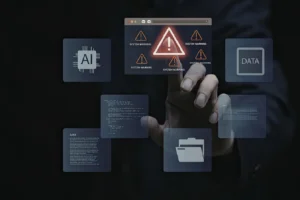
As the threat grows, countries are investing more in:
- cybersecurity systems
- digital resilience
- data protection
But the pace of threat evolution is often faster than the pace of preparedness.
The Blurring Line Between War and Technology
From War to Data highlights how technology and conflict are merging.
Digital infrastructure is now:
- a strategic asset
- a vulnerability
- and a potential weapon
This creates a complex environment where war is no longer clearly defined.
Final Take
From War to Data explains one of the most important changes in modern geopolitics.
Conflicts are no longer limited to physical spaces — they are expanding into digital systems that power the world.
In 2026, the most critical battles may not be fought on land or sea —
but in servers, networks, and data streams.
Follow us on instagram @thetejwas.
Also see-