
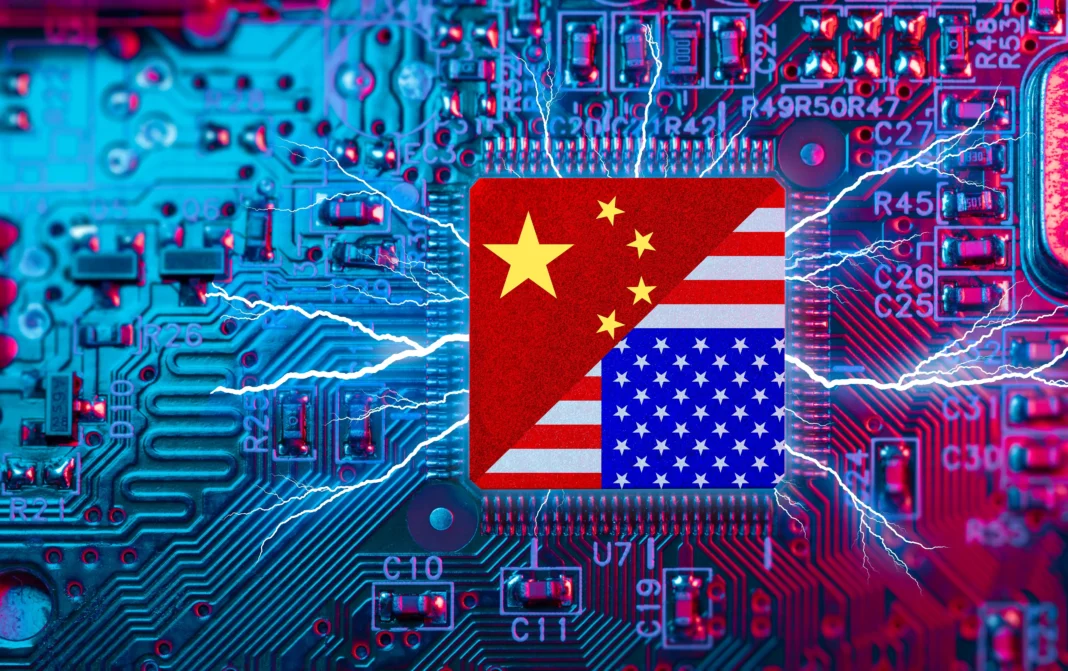
The battlefield of global power is no longer limited to land, sea, or air—it now runs through semiconductor fabs, AI algorithms, and supply chains. As rivalry between the United States and China intensifies, Washington has turned to technology restrictions as a strategic weapon, aiming to slow Beijing’s rise without firing a single shot.
This unfolding US–China tech war represents a new form of economic and geopolitical confrontation.
💻 Semiconductors: The New Strategic Resource
Semiconductors are the backbone of modern technology—from smartphones and electric vehicles to missiles and supercomputers. Recognizing their importance, the US has imposed export controls on advanced chips and chip-making equipment to prevent China from accessing cutting-edge technology.
By restricting high-end semiconductor sales, Washington seeks to limit China’s progress in military modernization, AI development, and advanced computing.
🧠 AI Restrictions and Technological Containment
Artificial intelligence is central to future economic and military power. The US has expanded restrictions on:
-
AI chips used for large-scale computing
-
Cloud services supporting advanced AI training
-
Collaboration between American firms and Chinese tech entities
These measures are designed to contain China’s technological ascent by cutting off access to the tools needed to train next-generation AI systems.
⚔️ Economic Warfare Over Military Conflict
Rather than risking direct military confrontation, the US is increasingly relying on economic warfare. Sanctions, blacklists, and investment bans have become tools of strategic pressure.
This approach allows Washington to:
-
Apply pressure without casualties
-
Rally allies under shared security concerns
-
Maintain escalation control
However, it also pushes Beijing to accelerate self-reliance, deepening long-term competition.
🌐 Shockwaves Across Global Supply Chains
The tech war has disrupted global supply chains:
-
Companies are forced to choose sides
-
Manufacturing is shifting toward “friend-shoring”
-
Costs are rising as efficiency gives way to security
Countries like Taiwan, South Korea, Japan, and even India are becoming key players as both sides restructure technology ecosystems.
🇨🇳 China’s Countermove Strategy
China has responded by investing heavily in domestic chip production, AI research, and alternative supply chains. While short-term setbacks remain, long-term decoupling could lead to two parallel technology worlds—one led by the US and another by China.
This technological bifurcation risks fragmenting the global digital economy.
🔮 The Future of Tech Geopolitics
The US–China tech war signals a shift in how power is exercised. Control over technology standards, data, and innovation pipelines may matter more than traditional military dominance.
In this new era, chips are weapons, algorithms are battlegrounds, and supply chains are frontlines. The outcome of this tech war will shape global power for decades to come.