
🌍 Introduction
The United Nations Security Council (UNSC) was created to maintain international peace and security. However, recent global crises have increasingly exposed its limitations. From armed conflicts to humanitarian emergencies, the Council’s inability to act decisively has raised serious questions about the effectiveness of the current global security architecture.
🏛️ How the UN Security Council Works
The UNSC consists of five permanent members with veto power and ten non-permanent members elected for limited terms. Decisions on major security issues require consensus among permanent members, making unity essential for action.
This structure, designed in the post–World War II era, reflects the power balance of a different time.
⚖️ The Veto and Political Deadlock
The veto power has become a central obstacle in recent crises. Diverging strategic interests among major powers often lead to:
-
Blocked resolutions
-
Delayed humanitarian action
-
Limited enforcement of international law
As geopolitical rivalries deepen, consensus has become increasingly difficult to achieve.
🌍 Recent Crises and Council Inaction
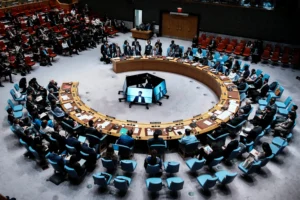
Multiple ongoing conflicts and emergencies have highlighted UNSC paralysis:
-
Inability to pass binding resolutions
-
Reliance on voluntary or regional initiatives
-
Reduced credibility of collective security mechanisms
This has shifted responsibility toward ad hoc coalitions and regional organizations.
🌐 Impact on Global Governance
UNSC inaction affects:
-
Conflict prevention efforts
-
Humanitarian response coordination
-
Trust in multilateral institutions
When global security institutions fail to respond effectively, enforcement of international norms weakens.
🔄 Calls for Reform
Growing dissatisfaction has renewed discussions on:
-
Expanding permanent or non-permanent membership
-
Limiting veto use in humanitarian crises
-
Strengthening coordination with regional bodies
However, meaningful reform remains difficult due to political resistance.
🔍 Looking Ahead
The UNSC’s challenges reflect broader changes in global power distribution. Whether the institution can adapt to contemporary geopolitical realities will shape the future of multilateral conflict management.