
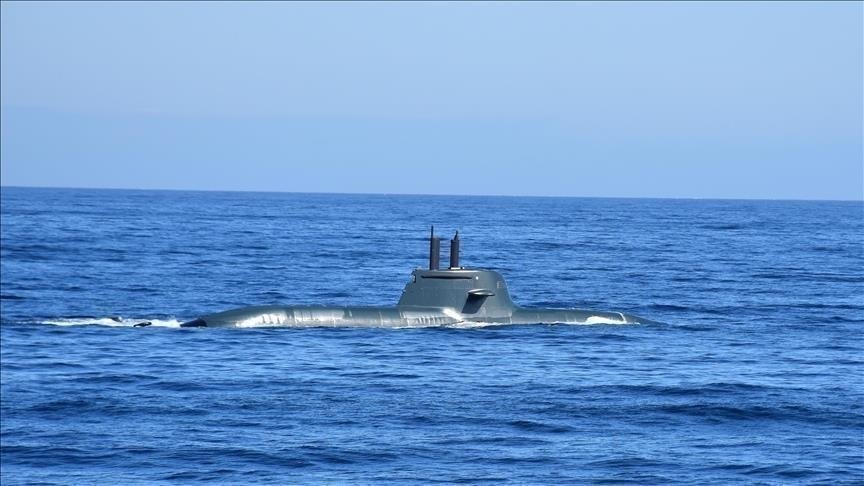
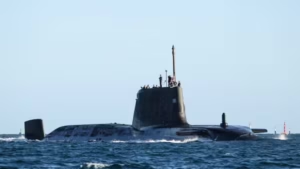
The Iran crisis has entered an even more dangerous phase, with reports that a British nuclear-powered submarine armed with Tomahawk cruise missiles has moved into the Arabian Sea as regional tensions continue to rise. Reuters, citing a Daily Mail report on March 21, said the deployment gives the UK the capability to launch long-range strikes if the conflict widens further.
This development is significant because it signals that Britain is not just watching events unfold from a distance. Even if London frames its broader role cautiously, a submarine presence in the Arabian Sea sends a strategic message: the UK wants strike capability, deterrence, and rapid-response reach in case the Iran crisis spirals further. Reuters also reported on March 20 that Britain had approved U.S. use of British bases, including Diego Garcia, for strikes on Iranian missile sites targeting ships in the Strait of Hormuz.
Why This Deployment Matters
A nuclear-powered submarine is not the same as a symbolic naval patrol. It represents stealth, endurance, and precision strike power. If the reported platform is carrying Tomahawk missiles, that means the UK could potentially hit targets from long range without exposing surface ships to the same level of risk. In geopolitical terms, this is a message of readiness more than spectacle.
For Tehran, such a move can be interpreted as part of a broader Western pressure architecture that already includes U.S. military assets, allied base access, and increased alert levels across the region. For Britain’s allies, it is reassurance that London is willing to position hard power near a crisis zone where shipping lanes, energy routes, and military facilities are all under pressure.
The Broader Regional Context
The submarine story is not unfolding in isolation. The backdrop is a wider Iran war that has already affected military calculations, economic forecasts, and civilian warnings. Reuters reported that the conflict widened sharply earlier this month, including major military actions involving U.S. forces.
At the same time, Washington has raised its alert posture for civilians. The U.S. State Department issued a worldwide caution for American citizens because of the evolving security environment linked to the Middle East conflict. That kind of advisory is not routine political theater; it reflects concern that escalation could create risks well beyond the immediate battlefield.
Britain, meanwhile, has tried to publicly balance deterrence with de-escalation language. On March 23, Prime Minister Keir Starmer said there was no current assessment suggesting Iran was targeting mainland Britain, even after reports that Iranian missiles had been fired toward the U.S.-UK base at Diego Garcia.
What Britain Is Signalling
London’s message appears two-layered. Publicly, the UK is stressing caution, assessment, and de-escalation. Militarily, however, its actions point to preparation for a much harsher scenario. Approving U.S. use of British bases and reportedly positioning a strike-capable submarine near the theater together suggest that Britain is preparing for escalation even while urging restraint.
That is how serious powers operate during major crises: diplomacy in public, force positioning in parallel.
There is also a domestic-security angle. Reuters reported on March 20 that two suspected Iranian spies were arrested near HM Naval Base Clyde in Scotland, home to Britain’s nuclear-armed and attack submarines. While that incident is separate from the Arabian Sea deployment, it underlines how seriously British authorities are treating the Iran-linked threat environment.
The Strategic Risk Ahead
The real danger is not just a single submarine deployment. It is the cumulative effect of every “defensive” and “precautionary” military move made by multiple countries at the same time. Once submarines, bases, missile sites, and shipping corridors all become active parts of the same crisis map, the chances of miscalculation rise sharply.
The Arabian Sea matters because it sits close to the wider energy and maritime arc connected to the Gulf. Any expansion of the conflict there would have consequences far beyond Iran and Britain. Oil markets, shipping insurance, military logistics, and regional alliances would all feel the shockwaves. Reuters has already reported that the broader war is feeding economic anxiety and supply concerns in the region and beyond.
Final Take
UK Launches Nuclear Submarine as Iran Tensions Escalate is not just a dramatic headline. It marks a deeper shift from diplomatic concern to visible military positioning. Whether the submarine is ultimately used or remains a deterrent asset, the message is unmistakable: Britain is preparing for a scenario in which the Iran crisis could widen fast, hit strategic chokepoints, and pull more Western military power directly into the confrontation.
For TEJWAS readers, the takeaway is simple: when submarines move quietly, geopolitics gets louder.
Follow us on instagram @thetejwas.
Also see-