
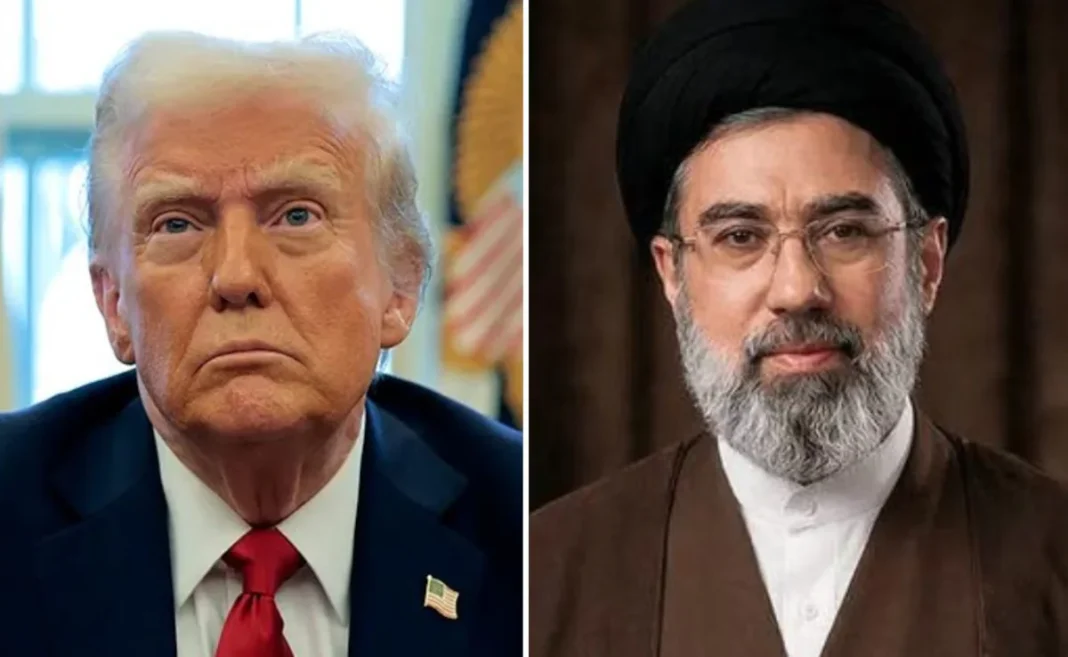
On the morning of Saturday April 4, 2026, Donald Trump opened his phone and typed what may be the most consequential three sentences posted on Truth Social since the start of the Iran war. “Remember when I gave Iran ten days to MAKE A DEAL or OPEN UP THE HORMUZ STRAIT. Time is running out — 48 hours before all Hell will reign down on them. Glory be to GOD!”
No diplomatic language. No caveats. No State Department briefing attached. Just a countdown — and the implicit weight of the most powerful military on earth behind it.
Trump’s Last Ultimatum to Iran expires on Monday, April 6 at 8 PM Eastern Time. That is when a 10-day pause he personally granted on March 26 — at what he described as Iran’s own request — runs out. What happens in the next 48 hours could determine whether the world’s worst energy crisis since the 1970s deepens into something far more destructive, or whether a diplomatic thread, however thin, holds long enough to pull both sides back from the edge.
How We Got Here: The Six Weeks That Changed Everything
To understand why Trump’s 48-hour ultimatum carries the weight it does, you need to understand what the past five weeks have already done to the world.
On February 28, 2026, the United States and Israel launched Operation Epic Fury — coordinated airstrikes on Iran’s military facilities, nuclear sites, IRGC headquarters and leadership infrastructure. Among those killed in the strikes was Supreme Leader Ali Khamenei. Iran’s response was immediate. Within hours, the IRGC transmitted warnings via VHF radio to every vessel in the Strait of Hormuz: no ship would be permitted to pass.
The Strait of Hormuz is a 33-kilometre-wide passage between Iran and Oman. Through it flows approximately 20 million barrels of oil every single day — roughly one-fifth of all global oil consumption. It carries 27 percent of the world’s maritime crude trade. China, India, Japan and South Korea together account for 69 percent of all oil and gas transiting through it. When Iran closed the strait, it did not just close a waterway. It reached into the industrial metabolism of every major Asian economy and began to strangle it.
By mid-March, maritime traffic through the strait had plummeted by 98 percent. Brent crude, which sat at roughly $70 per barrel at the start of 2026, crossed $100 by March 8 and peaked at $166 — their highest on record — on March 19. The International Energy Agency called it the worst energy crisis in history, worse than the 1973 oil embargo, worse than the 1979 revolution, worse than the post-Ukraine shock. IEA Executive Director Fatih Birol stated plainly that the world had lost 12 million barrels per day — more than double the volume lost in either of the 1970s crises combined. He added: “The next month, April, will be much worse than March.”
The IEA released 400 million barrels from strategic reserves. OPEC+ pledged extra production. Neither measure came close to compensating for the scale of the disruption. As energy strategist Naif Aldandeni described the world’s largest coordinated emergency oil release: “This feels like a small bandage on a large wound.”
The Ultimatum: What Trump Actually Said and What It Means
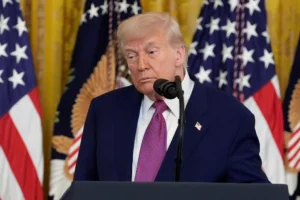
Trump’s Truth Social post on Saturday was not his first ultimatum to Iran. On March 21, he first threatened to obliterate Iran’s power plants unless the strait reopened within 48 hours. Two days later on March 23, he delayed that threat following what he described as “very good and productive conversations” with Iranian officials. He then pushed the deadline again to April 6 at Iran’s request. On Friday he posted: “With a little more time, we can easily OPEN THE HORMUZ STRAIT, TAKE THE OIL, and MAKE A FORTUNE.”
Saturday’s post represents the final countdown of that extended timeline — with Trump now making clear the April 6 deadline will not move again.
Senator Lindsey Graham, who spoke directly to Trump after the post, reinforced the message with none of the diplomatic softening usually attached to such statements: “After speaking with President Trump, I am completely convinced that he will use overwhelming military force against the regime if they continue to impede the Strait of Hormuz and refuse a diplomatic solution. If it’s not clear to Iran and others by now that President Trump means what he says then I don’t know when it will ever be.”
The ultimatum arrives at a moment when Iran has already suffered serious military degradation. CENTCOM Commander Admiral Brad Cooper reported that at least 17 Iranian ships were destroyed in the early weeks of Operation Epic Fury. The US has struck more than 90 Iranian military targets on Kharg Island alone. Iran’s radar systems have, in Trump’s own words, been “100% annihilated.” And on Friday April 3, an F-15E Strike Eagle became the first confirmed American warplane to be shot down over Iranian territory in the war — a pilot is currently missing, adding a hostage dimension to an already combustible negotiation.
Iran’s Response: Gates of Hell Will Open for You
Iran did not blink. Hours after Trump’s Truth Social post, General Ali Abdollahi Aliabadi of the Khatam al-Anbiya Central Headquarters issued a formal response, describing the ultimatum as “a helpless, nervous, unbalanced and stupid action.” And then, using Trump’s own language back against him: “The simple meaning of this message is that the gates of hell will open for you.”
Iran’s Parliamentary Speaker Mohammad Baqer Ghalibaf had already set the tone earlier in the week, declaring his country was “locked, loaded and standing tall.” Iranian military spokesmen vowed “more crushing, broader and more destructive” attacks on US and Gulf state targets.
Yet the picture is not entirely defiant. Foreign Minister Abbas Araghchi on Saturday signalled some openness to talks — while calling the US administration’s 15-point proposal “unreasonable.” The gap between what Washington demands and what Tehran will accept remains wide. But the channel is not entirely dead.
The Diplomatic Thread: Pakistan, Turkey and Egypt in the Room
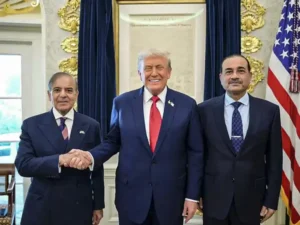
The most consequential development happening behind the scenes is the backchannel led by Pakistan. Indirect negotiations have been led by US Vice President Vance and Iran’s Parliamentary Speaker Ghalibaf, with Pakistani military chief Field Marshal Asim Munir serving as the critical mediator. Pakistan’s Foreign Ministry spokesperson confirmed the country’s ceasefire efforts are “right on track” despite ongoing obstacles.
Mediators from Turkey and Egypt are also working alongside Pakistan to bring both sides back to a formal negotiating table. Two regional officials told the Associated Press that a compromise was being drafted to bridge the gap between the US demand for full strait reopening and Iran’s demand for security guarantees and sanctions relief.
Italy, facing a severe energy crisis of its own as a major Gulf energy importer, sent Prime Minister Giorgia Meloni to Doha on April 4 to meet Qatar’s Emir Sheikh Tamim, reaffirming together the necessity of opening the Strait of Hormuz.
The question every government watching April 6 is asking is simple: does Trump strike if the strait is not open by Monday evening? Or does he extend the deadline again, citing diplomatic progress?
What April 6 Looks Like for India
India sits directly in the path of every scenario that plays out on April 6. As of late March, India’s strategic petroleum reserves provide approximately 60 days of cover. The Trump administration issued a 30-day emergency waiver allowing India to purchase sanctioned Russian crude — oil that travels via the North Sea and Pacific routes, bypassing the Hormuz chokepoint entirely. But that waiver expires in April, and its renewal is not guaranteed.
The Indian Navy’s Operation Sankalp has been expanded to 23 warships active in the Gulf of Oman to escort Indian-flagged tankers. India’s external affairs ministry described it as closely monitoring the situation and prepared to take calibrated steps to minimise adverse impact. But every Indian household is already feeling the crisis — at the petrol pump, the LPG cylinder, the grocery store, and the stock market.
If the April 6 deadline triggers new US strikes on Iranian energy infrastructure, April oil prices — already forecast to be worse than March according to the IEA — could push toward $170 a barrel. At that level, analysts estimate the inflationary impact on India roughly doubles.
Tejwas Editorial
Trump’s ultimatum is the loudest thing that has happened in this war since the first strikes on February 28. But the most important thing happening right now is not on Truth Social. It is in a quiet room somewhere in Islamabad or Doha, where Pakistani, Turkish and Egyptian mediators are trying to find four words that both Washington and Tehran can live with. The world has 48 hours. The energy market has 48 hours. The missing American pilot has 48 hours. Tejwas has been tracking this conflict since the first IRGC warning was transmitted through the Strait of Hormuz in late February. What we know is this: Trump has extended this deadline twice before, and Iran has survived every ultimatum this administration has issued so far. What makes April 6 different is the scale of what has already been destroyed, the economic cost that is now measuring itself in millions of barrels per day, and the reality that no government — not Washington, not Tehran, not New Delhi — can sustain this indefinitely. Something has to give. The question is what.
Follow us on instagram @thetejwas.
Also see-