
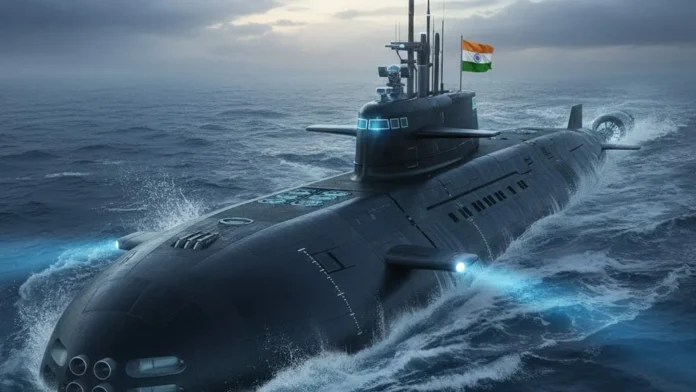
India Set to Acquire 6 Advanced German AIP Submarines
Strategic Context
India is moving closer to finalizing a massive ₹99,000 crore defence deal to acquire six advanced Air-Independent Propulsion (AIP) submarines from Germany under the Indian Navy’s Project-75I program. The project represents one of India’s largest naval modernization efforts aimed at strengthening underwater warfare capabilities amid rising maritime competition in the Indo-Pacific.
The submarines will be built in India in collaboration with German defence manufacturer ThyssenKrupp Marine Systems (TKMS) and Mazagon Dock Shipbuilders Limited, aligning with the government’s “Make in India” defence manufacturing strategy.
The program comes at a time when the Indian Navy faces growing submarine deployments from China in the Indian Ocean and expanding naval capabilities in Pakistan, making underwater deterrence a critical pillar of India’s maritime strategy.
What Project-75I Includes
Project-75I aims to induct six next-generation diesel-electric attack submarines equipped with advanced AIP technology, which allows submarines to remain underwater for much longer periods without surfacing.
Key features expected in the submarines include:
-
Air-Independent Propulsion (AIP) enabling longer submerged endurance
-
Advanced stealth and acoustic suppression systems
-
Capability to launch heavyweight torpedoes and cruise missiles
-
Integrated combat management systems and modern sonar technology
These submarines will likely be based on Germany’s Type 214 submarine design, known for its stealth and endurance in conventional submarine operations.
Once operational, the vessels will significantly enhance India’s ability to conduct sea denial missions, intelligence gathering, and strategic patrols in contested waters.
Why AIP Technology Matters

AIP technology is considered a game-changer for conventional submarines. Traditional diesel-electric submarines must surface periodically to recharge batteries, making them vulnerable to detection.
With AIP systems, submarines can:
-
Stay submerged for weeks instead of days
-
Operate more quietly, reducing detection risk
-
Conduct long-duration stealth patrols
This capability is particularly important for the Indian Ocean region, where stealth and endurance are critical in monitoring adversary naval movements.
Strategic Impact for India

The induction of six AIP submarines will significantly strengthen India’s maritime deterrence posture. Analysts believe the deal will help India:
-
Counter expanding Chinese naval presence in the Indian Ocean
-
Maintain technological parity with Pakistan’s submarine fleet
-
Strengthen long-range surveillance and sea denial capabilities
-
Expand domestic defence manufacturing through technology transfer
The project also signals deepening strategic cooperation between India and Germany in defence technology and naval engineering.
Long-Term Implications
Project-75I represents a crucial step in India’s broader naval modernization strategy. As maritime competition intensifies across the Indo-Pacific, submarines are becoming one of the most decisive elements of naval power.
By acquiring advanced AIP submarines and building them domestically, India aims to develop both operational capability and industrial capacity in underwater warfare systems.
If successfully executed, the program will reshape the balance of power in the Indian Ocean and strengthen India’s position as a leading maritime security provider in the region.
Follow our page @tejwas_ for daily updates.
More from world;