Strategic Context
The reported killing of Ali Khamenei in a major joint strike by the United States and Israel has triggered geopolitical shockwaves across the Middle East and beyond. The event has also produced ripple effects far from Iran, including in India’s Jammu and Kashmir region, where authorities have tightened security in anticipation of protests during Friday prayers.
Given the Valley’s sensitive political environment and the emotional resonance of developments in the wider Muslim world, the local administration has moved swiftly to prevent unrest.
What Happened
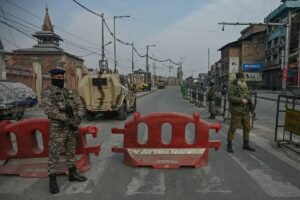
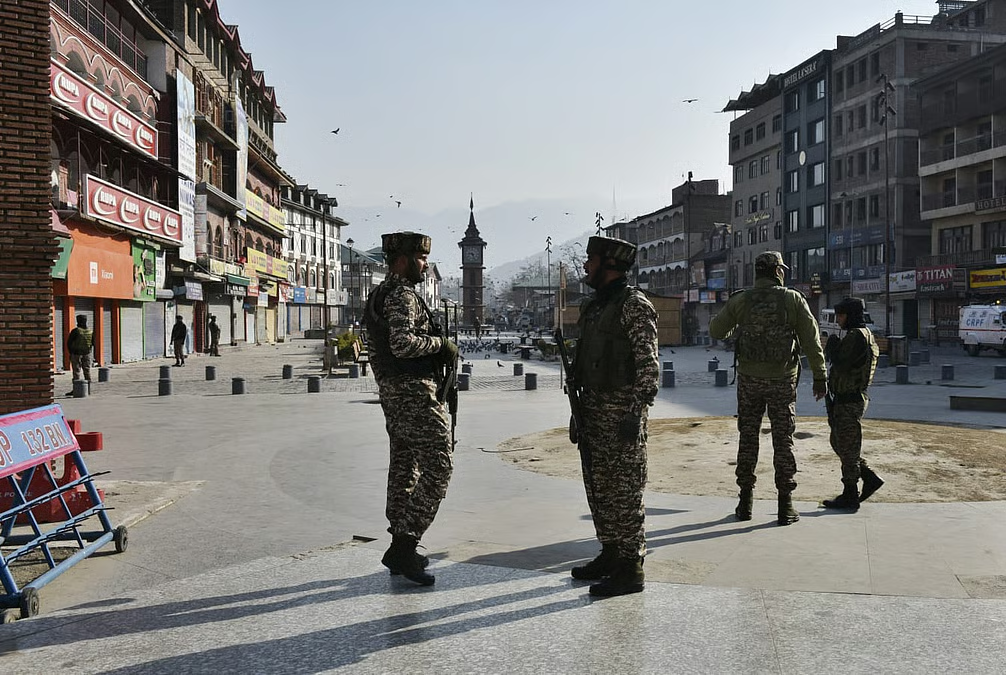
Authorities across Kashmir have significantly increased security deployment ahead of Friday congregational prayers. Police and paramilitary forces have been stationed across major towns, particularly in Srinagar, with barricades placed at key intersections and sensitive locations.
The restrictions come after demonstrations and mourning gatherings emerged earlier in the week following reports of Khamenei’s death. Some areas witnessed marches, protest slogans, and processions, prompting the administration to impose precautionary measures.Officials said movement restrictions would remain in place across several districts, while the situation would be reviewed after the Friday prayer congregations conclude.
Preventive Restrictions Across the Valley
To maintain law and order, authorities have implemented several temporary controls:
-
Heavy deployment of police and CRPF personnel in sensitive areas
-
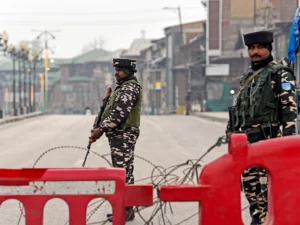
Barricades and concertina wires around major junctions in Srinagar
-
Mobile internet restricted to 2G speeds
-
Prepaid mobile calling services suspended
-
Educational institutions temporarily closed
Officials stated that the measures are purely precautionary and aimed at preventing any escalation or misinformation during a sensitive period.The government has also appealed to citizens to maintain calm and avoid gatherings that could disrupt public order.
Religious and Political Sensitivities
For many Shia Muslims globally, the Iranian Supreme Leader holds religious as well as political significance. In parts of Kashmir and Ladakh, mourning gatherings and shutdown calls were reported earlier this week, reflecting the emotional impact of the development.
Authorities are particularly cautious about Friday prayers, when large congregations gather in mosques across the Valley. Security agencies fear that protests could emerge after prayers, which historically has been a flashpoint moment for demonstrations.
Why It Matters for India
While the incident is rooted in Middle Eastern geopolitics, it highlights a broader strategic reality: global conflicts can have localized political and security implications inside India.
Three key takeaways stand out:
-
Global Islamic political developments resonate strongly in Kashmir, sometimes translating into local protests.
-
India must manage domestic security while maintaining diplomatic balance in the Middle East.
-
Information control and rapid security deployment remain critical tools to prevent unrest.
The Strategic Bigger Picture
The killing of Iran’s top leader represents a dramatic escalation in the broader confrontation between Iran, Israel, and the United States. If tensions continue to intensify, the geopolitical ripple effects could extend across South Asia.
For India, the challenge will be managing domestic stability while navigating complex strategic relationships with Israel, the United States, Iran, and Gulf countries.In the immediate term, the focus in Kashmir remains clear: ensuring that Friday prayers pass peacefully and that the Valley avoids further escalation.
Follow our page @tejwas_ for daily updates.
More from world;


 company. All Rights Reserved.