
🌍 Introduction
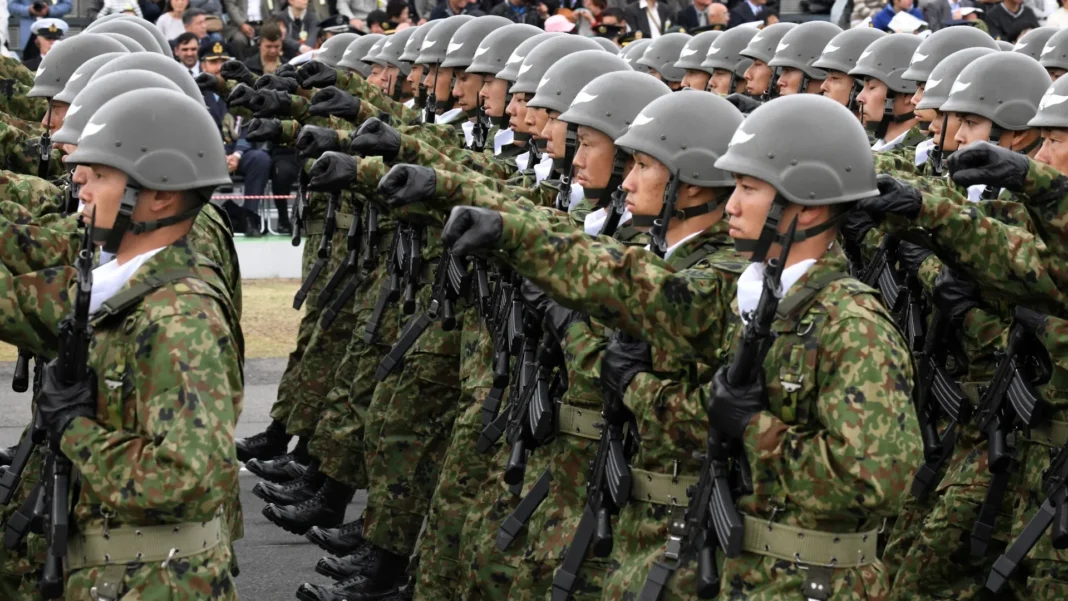
Japan is undergoing its most significant military transformation since the end of World War II. Long known for its pacifist constitution and restrained defense posture, Tokyo is now rapidly expanding its military capabilities, revising defense doctrines, and increasing defense spending. This shift reflects growing security concerns in East Asia and marks a major change in Japan’s role in regional and global geopolitics.
📜 Japan’s Post-War Military Framework
After World War II, Japan adopted a pacifist constitution, particularly Article 9, which renounced war and limited the country’s military role to self-defense. For decades, Japan maintained the Self-Defense Forces (SDF) with strict constraints on offensive capabilities and overseas military operations.
This framework shaped Japan’s identity as a defensive power reliant on its alliance with the United States for extended security guarantees.
⚠️ What Is Driving Japan’s Military Expansion?
Several recent developments have pushed Japan to reassess its security posture:
-
Rising Regional Tensions: Increased military activity in the East China Sea and Taiwan Strait has heightened security concerns.
-
Missile Threats: Advancements in missile technology and frequent missile tests in the region have exposed vulnerabilities.
-
Changing Global Security Environment: The Ukraine war has reinforced fears about territorial aggression and the limits of deterrence.
-
Alliance Responsibilities: Japan’s role within the US-led security framework in the Indo-Pacific is expanding.
These factors have created urgency for Japan to strengthen its defense readiness.
🛡️ Key Changes in Japan’s Defense Policy
Japan’s military expansion includes:
-
Significant increases in defense spending
-
Acquisition of long-range strike capabilities
-
Investment in missile defense systems
-
Strengthening cyber and space defense units
-
Enhanced interoperability with allied forces
Tokyo has also adopted new strategic documents redefining how and when military force can be used for national defense.
🌏 Regional and Global Reactions
Japan’s policy shift has drawn mixed reactions:
-
Allies view it as a stabilizing move that strengthens deterrence in the Indo-Pacific.
-
Neighboring countries are closely monitoring developments due to historical sensitivities and regional power dynamics.
The expansion is reshaping defense planning across East Asia and influencing broader Indo-Pacific security calculations.
🌐 Geopolitical Implications
Japan’s evolving military posture signals:
-
A more active role in regional security
-
Reduced dependence on a single security guarantor
-
Greater participation in multilateral defense cooperation
This transition contributes to a changing balance of power in the Indo-Pacific, where military preparedness and strategic partnerships are becoming increasingly important.
🔍 Looking Ahead
Japan’s military expansion represents a long-term structural shift rather than a temporary response. How Tokyo balances deterrence, regional stability, and constitutional principles will shape East Asian geopolitics in the coming years.