
Strategic Context
On 23 February 2026, the Government of India formally unveiled PRAHAAR — the nation’s first comprehensive counter-terrorism doctrine, issued by the Ministry of Home Affairs (MHA). Marking a milestone in national security policy, PRAHAAR consolidates India’s approach to terrorism under a unified, proactive and technology-aware framework amidst evolving geopolitical and hybrid threats. Traditionally, India’s counter-terror measures focused on reactive responses to attacks. But emerging threats — including cross-border terror networks, cyber-attacks and misuse of drones — demanded a strategic reset. PRAHAAR represents this shift from fragmented measures to an integrated doctrine, blending intelligence, law enforcement, technology and community resilience.
What Is PRAHAAR?
PRAHAAR — literally meaning “strike” — is more than a policy document; it is a national counter-terrorism strategy that defines how India will prevent, detect, respond to and recover from terrorism in a coordinated manner.
At its core, the doctrine emphasises:
Zero tolerance for terrorism in all forms;
- Intelligence-led prevention
- Coordinated responses across agencies
- Human rights & rule-of-law compliance
- International cooperation
Community engagement and resilience
The framework moves beyond traditional security silos to include technology-driven challenges like cyber threats and unmanned aerial systems.
PRAHAAR’s Seven Pillars Explained
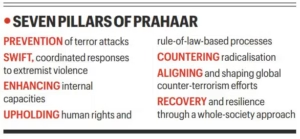
According to the official strategy, PRAHAAR rests on seven pillars, each representing a critical phase of counter-terror operations:
1.Prevention — Proactive intelligence gathering and disruption of terror plots before they materialise.
2.Response — Swift, proportionate, multi-layered reaction mechanisms.
3.Aggregating Internal Capacities — Seamless integration of central, state and local agencies.
4.Human Rights & Rule of Law — Ensuring that counter-terror action respects legal and constitutional safeguards.
5.Attenuation of Conditions Enabling Terror — Addressing radicalisation, recruitment and terror financing.
6.Alignment with Global Efforts — Strengthening international cooperation on intelligence sharing, extradition, and counter-terror financing.
7.Recovery & Resilience — Rapid restoration of normalcy post-attack and societal rehabilitation.
Cross-Border Terror in Focus:
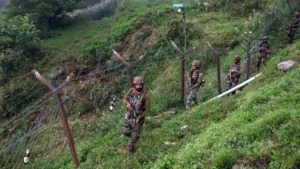
PRAHAAR explicitly acknowledges the persistent threat of cross-border terrorism, particularly from hostile state and non-state actors that sponsor or facilitate terror networks. Global groups such as Al-Qaeda and ISIS are cited as exploiting sleeper cells and online channels to foment violence in India. This doctrinal clarity signals a more structured and integrated whole-of-government approach — replacing ad-hoc responses with a predictable, strategic playbook that guides action from intelligence agencies to diplomatic outreach.
Cyber & Drone Threats: Modern Battlefronts
A defining feature of PRAHAAR is its explicit recognition of high-tech threats:
Cyber Threat Landscape
Terror actors now operate via encrypted messaging, dark web platforms and crypto wallets, complicating detection and disruption.
Criminal hackers and even nation-state actors target India’s critical infrastructure via cyber attacks — a risk highlighted as equal to physical threats.
The policy mandates enhanced cyber-intelligence capabilities and coordinated online monitoring to prevent radicalisation, recruitment, propaganda and operational planning.
Drones & Unmanned Systems
- Drones are no longer just surveillance tools; they can deliver explosives or act as vectors in terror operations.PRAHAAR emphasises counter-drone strategies and real-time detection systems to mitigate misuse by both organised groups and hybrid actors.
- The doctrine also focuses on technology integration — from radar to AI-enabled threat identification — to negate aerial threats before they materialise.
- These provisions reflect an understanding that future terror fronts will be digitally and technologically enabled — requiring tools, training and legal frameworks that are up to the challenge.
Why PRAHAAR Matters;
India’s geopolitical environment and evolving threat matrix make PRAHAAR a strategically vital reset:
- It reduces reactive policy gaps and increases predictability in crisis response.
- It enforces inter-agency cooperation, reducing duplication and friction.
- It brings societal actors — from local police to civil society — into a whole-of-society defense posture.
- It positions India as a credible partner in global counter-terror cooperation.
Looking Ahead
PRAHAAR is a foundation, not a finish line. Its success will be measured by how effectively India integrates technology, intelligence, diplomacy and law enforcement into a seamless security architecture. As terrorist tactics evolve, the doctrine’s continual adaptation and implementation will determine India’s resilience against 21st-century threats.
Follow our page @tejwas_ for daily updates
More from world;