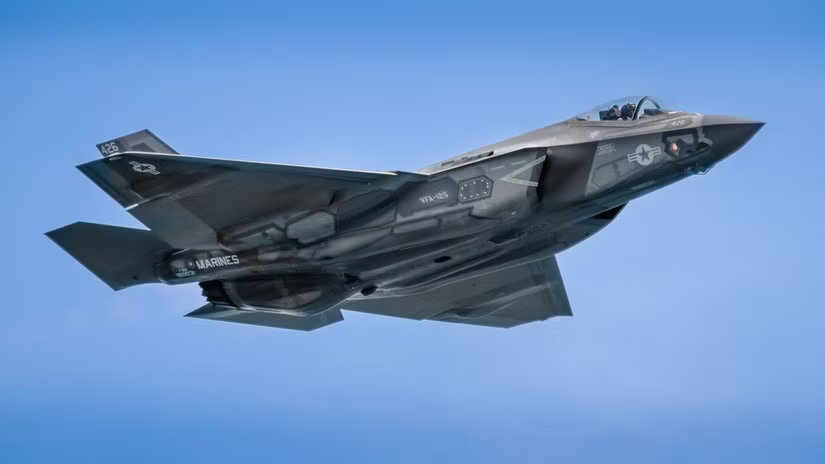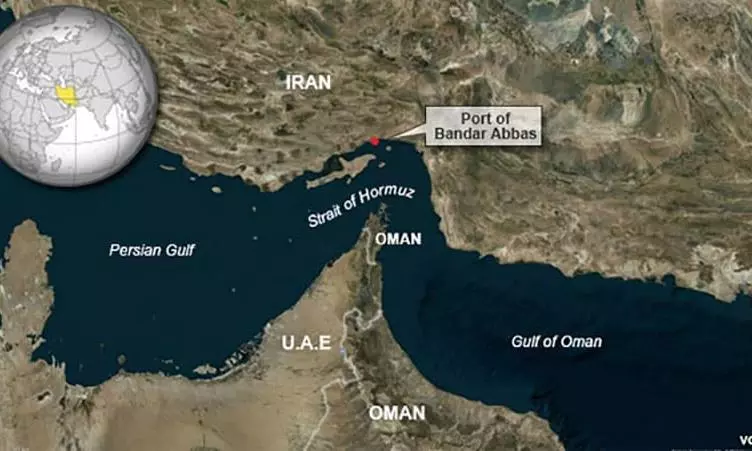

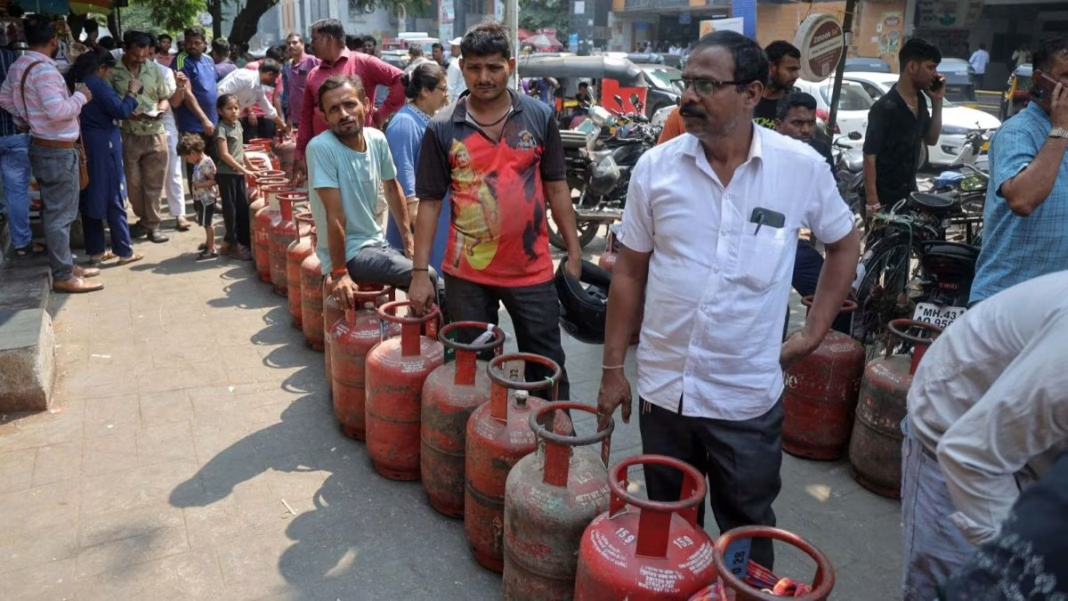
For many Indians, wars in West Asia can feel distant until they begin affecting daily life at home. That moment has now arrived. The widening conflict around Iran and the disruption in the Strait of Hormuz are no longer just foreign policy headlines. They are starting to hit Indian kitchens, fuel bills, and household budgets. Reuters has reported that India’s LPG consumption slowed in mid-March because the country is facing its worst cooking-gas crunch in decades after shipping disruptions in the Strait of Hormuz.
This is why the Iran war matters far beyond battle maps. It is directly linked to how India imports energy, how global oil prices move, and how quickly those shocks pass through to consumers. In TEJWAS terms, this is the real front line of geopolitics: when global war starts reshaping everyday life.
Why the Strait of Hormuz Matters to India
The Strait of Hormuz is one of the most important energy chokepoints in the world. A large share of global crude and gas shipments passes through this narrow route, making it essential to Asian energy security. Recent Reuters reporting shows that shipping in and around Hormuz has been badly disrupted, with tankers anchoring, delaying movement, and raising fears of prolonged supply stress.
For India, that disruption is extremely serious. India remains heavily dependent on energy imports, and when tankers slow down or shipping insurance becomes more expensive, the impact quickly spreads across the domestic system. Even countries far from the battlefield are forced to absorb the cost of instability.
LPG Shortages Are Now a Ground Reality
The most immediate impact in India has been seen in LPG. Reuters reported that preliminary data showed Indian state fuel retailers’ LPG sales slowed in the first half of March as the country struggled with severe shortages. This is not a minor blip. The same reporting described it as India’s worst LPG crisis in decades, driven by shipping disruption linked to the Iran war.
That matters because LPG is now indispensable in millions of Indian homes. For urban households, it is the default cooking fuel. For many semi-urban and rural families, it has become central to daily life through years of energy transition. When LPG supply tightens, the crisis is not abstract. It affects meals, spending, and household stability.
Fuel Prices, the Rupee, and the Wider Economic Shock
The damage does not stop at cooking gas. Oil markets have also tightened sharply. Reuters reported that the rupee has come under pressure as oil prices surged, with the currency weakening in offshore markets and expected to slide further if the energy shock continues.
This matters because higher oil prices affect transport, logistics, manufacturing, and inflation. Even if pump prices do not spike overnight, the wider economy begins absorbing the pressure. Freight becomes costlier, imported goods become more expensive, and the government faces new balancing pressures on subsidies and fiscal planning.
In geopolitical terms, this is how war travels. It does not need to cross borders through soldiers. It crosses through shipping lanes, currency markets, and energy invoices.
Why India Is Looking at Iranian Oil Again
The crisis has become so severe that Indian refiners are now looking again at Iranian oil after the United States temporarily waived sanctions for certain cargoes already at sea. Reuters reported that Indian and other Asian refiners are exploring purchases under this waiver because regional stockpiles are low and energy stress is rising fast.
This is a major shift. For years, India reduced Iranian oil purchases under U.S. sanctions pressure. But emergencies change calculations. When energy security is threatened, India’s strategic flexibility comes back into focus. This does not automatically mean a full long-term reset, but it does show how quickly hard geopolitics can force policy adjustments.
The Bigger Strategic Warning for India
This crisis is a warning for India on three levels. First, it highlights how vulnerable the country remains to West Asian conflict despite efforts to diversify energy sources. Second, it shows how global chokepoints like Hormuz can disrupt domestic life faster than many people expect. Third, it underlines that India’s foreign policy, shipping strategy, and energy security can no longer be treated as separate issues.
Reuters has also reported that India has been seeking safe passage for its vessels through Hormuz while broader tensions continue. That alone shows how tightly national interest is now tied to a conflict far from India’s borders.
Conclusion
The Iran war is no longer just a war-zone story for Indian audiences. It is now a kitchen story, a fuel-price story, and an economic story. LPG shortages, oil price surges, currency pressure, and renewed interest in Iranian crude all point to the same conclusion: global conflict is already hitting Indian homes.
For TEJWAS readers, the lesson is clear. The next phase of modern geopolitics will not only be measured in missile strikes and military moves. It will also be measured in gas cylinders, household budgets, and the price India pays for instability in distant waters.
Follow us on instagram @thetejwas.
Also see-