

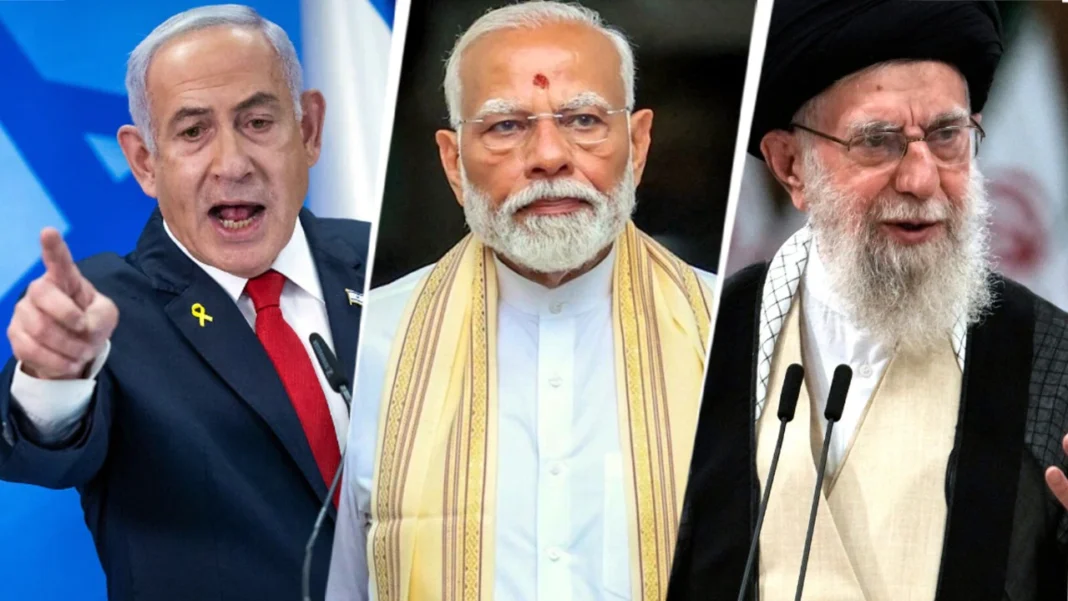
India’s Position in US–Israel Strikes on Iran
The latest US–Israel military strikes on Iran have sharply escalated tensions in West Asia. As global powers react, India’s position in US–Israel strikes on Iran reflects a carefully calibrated strategy rooted in strategic autonomy, energy security, and regional stability.
New Delhi is not a direct participant in the conflict. Yet, the implications for India are immediate and significant — from oil supplies and diaspora safety to diplomatic balancing between key strategic partners.
Immediate Response — Citizen Safety and Caution
India’s first priority has been the safety of its nationals in both Israel and Iran. With thousands of Indian workers, students, and professionals in the region, the government issued advisories urging caution, limited movement, and close contact with embassies.This response underscores a consistent Indian doctrine: protect citizens first, assess geopolitics second.
Diplomatic Balancing Between Israel and Iran

India shares strong defense and technology ties with Israel. At the same time, India has historically maintained civilizational and economic engagement with Iran, particularly in connectivity initiatives like Chabahar Port.Taking sides openly could risk strategic leverage. Therefore, India’s Position in US–Israel Strikes on Iran is marked by restraint, avoiding public alignment while emphasizing de-escalation and dialogue.This reflects India’s long-standing principle of multi-alignment rather than bloc politics.
Energy Security and the Strait of Hormuz Factor
Nearly half of India’s crude oil imports transit through the Strait of Hormuz. Any disruption due to military escalation could spike global oil prices, increase India’s import bill, and fuel domestic inflation.
For a fast-growing economy, energy security remains a national security priority. This economic vulnerability heavily shapes India’s cautious diplomatic tone.
Strategic Autonomy in a Polarized World

India’s foreign policy today operates under the doctrine of strategic autonomy. Whether in the Russia-Ukraine conflict or Middle East crises, New Delhi avoids binary choices.
In the US–Israel Iran conflict, India is likely to:
-
Advocate de-escalation
-
Avoid endorsing military action
-
Maintain working relations with all stakeholders
This approach preserves flexibility in an unpredictable global order.