

Strategic Context: A Changing Global Order
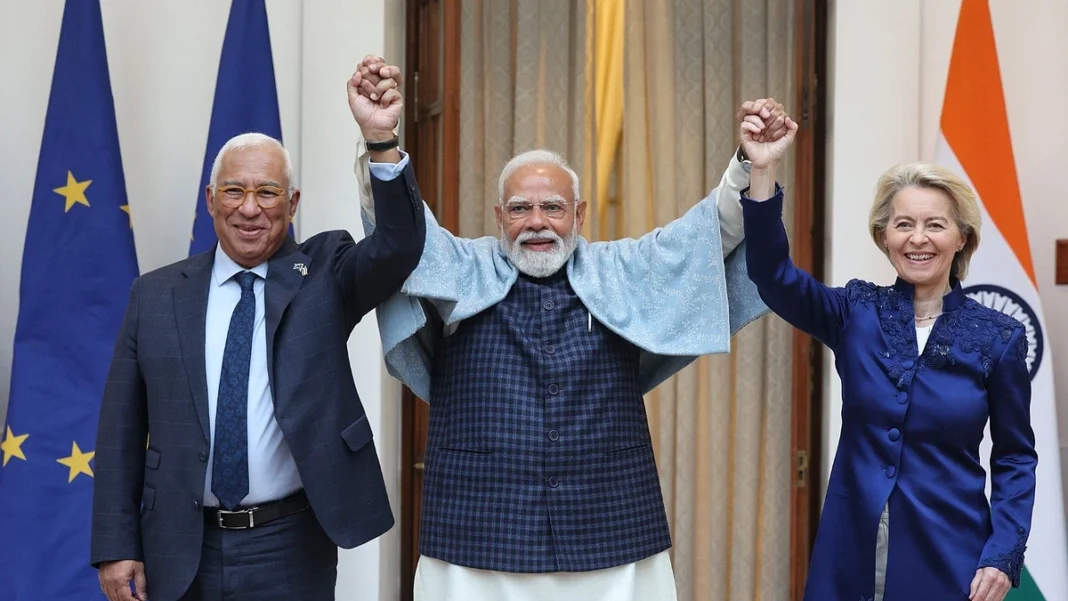
The global strategic environment is undergoing rapid transformation. The war in Ukraine, instability in West Asia, growing China assertiveness, and supply chain vulnerabilities have pushed major powers to reassess partnerships. In this evolving order, the European Union and India are steadily expanding their strategic convergence.The EU India Strategic Security Partnership is no longer confined to trade and diplomacy. It is increasingly centered on defense cooperation, maritime security, resilient supply chains, and emerging technologies.
What Has Changed in EU–India Security Ties?

Over the past few years, India and the European Union have institutionalized high-level security dialogues, joint naval exercises, and cooperation on counterterrorism and cyber threats. The EU’s Indo-Pacific strategy explicitly recognizes India as a key pillar for regional stability.India, for its part, views Europe as a trusted technology partner and a balancing force in a multipolar world. Defense industrial cooperation, joint research in critical technologies, and intelligence sharing are gaining momentum.
The partnership now extends to:

- Maritime domain awareness in the Indo-Pacific
- Counter-piracy and freedom of navigation efforts
- Cybersecurity and digital governance
- Secure semiconductor and critical mineral supply chains
Why It Matters for the Indo-Pacific
The Indo-Pacific has emerged as the central theater of geopolitical competition. While the EU is geographically distant, its economic and security interests are deeply tied to the region’s stability.
India’s role as a resident Indo-Pacific power aligns with European concerns over open sea lanes, rule-based order, and preventing unilateral dominance. Joint naval deployments and coordinated diplomacy signal that the EU is willing to move beyond rhetoric.
For India, European engagement diversifies its strategic partnerships beyond the US-led frameworks while reinforcing its image as a central security provider in the Indian Ocean.
Who Benefits?
India benefits through:
- Access to advanced defense technologies
- Stronger diplomatic leverage vis-à-vis China
- Diversified arms and industrial partnerships
The EU benefits through:
- Strategic presence in the Indo-Pacific
- Reduced overdependence on China
- Expanded defense-industrial opportunities
This convergence also strengthens the broader democratic coalition in global governance platforms.
Risks and Strategic Constraints
Despite growing alignment, challenges remain. Europe’s internal divisions on China policy, India’s strategic autonomy doctrine, and regulatory complexities can slow implementation.
Additionally, defense cooperation requires harmonization of standards, export control clarity, and long-term industrial trust—areas that demand sustained political will.
Long-Term Implications
If sustained, the EU–India strategic security partnership could reshape Eurasian geopolitics. It signals a shift from transactional engagement to structured security collaboration. Over time, this could translate into co-development of defense systems, coordinated Indo-Pacific deployments, and deeper technology integration.
In an era defined by power realignments, the EU and India are positioning themselves not merely as economic partners, but as strategic stakeholders in global security architecture.
The coming decade will determine whether this partnership evolves into a durable pillar of multipolar stability.
Follow our page @tejwas_ for daily updates.
More from world;