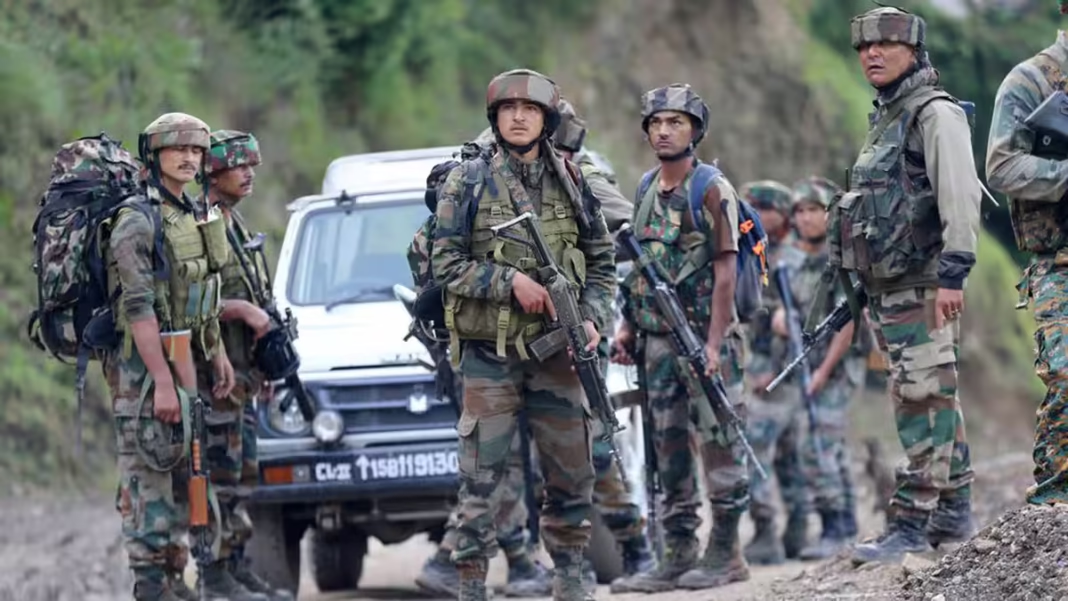


Kashmir, Spying, Demolitions: How Modi’s India Embraced the Israel Model
Strategic Context: New Delhi’s Security Doctrine
In recent years, India under Prime Minister Narendra Modi has not only deepened strategic ties with Israel but — according to analysts — also mirrored aspects of Israel’s security-oriented governance in its internal policies, particularly in Indian-administered Kashmir.
The now-controversial comparison was first publicly articulated in 2019 when a senior Indian diplomat suggested adopting an “Israeli model” in Kashmir — a remark that has gained renewed attention as India’s policies have evolved.
The ‘Israel Model’: Core Features and Indian Parallels
-
Surveillance and Intelligence

One of the most visible aspects of the so-called “Israel model” is heavy surveillance and monitoring of populations perceived as security risks.
- In Kashmir, authorities have deployed extensive digital surveillance systems, with widespread use of CCTV, drones and mobile monitoring during periods of unrest. Critics say this creates an environment of constant oversight.
- Long communication blackouts and controlled internet access — measures used in Kashmir, especially after August 2019 — echo techniques long seen in Israel’s governance of Palestinian territories.
- Reports suggest India has acquired advanced reconnaissance and spy technologies, some sourced through closer ties with Israeli tech partners, to bolster its counter-insurgency efforts.
Supporters of these measures argue they help pre-empt violence and provide actionable intelligence. However, civil liberties advocates warn such tools risk normalising surveillance beyond legitimate security needs.
-
Bulldozers and Demolitions

Another flashpoint has been the use of demolitions as a security and punitive measure.
- In several BJP-governed regions, including parts of Uttar Pradesh and Kashmir, the state has razed homes and commercial properties linked to alleged offenders — often without extensive due process.
- Critics equate this with Israel’s demolition of Palestinian homes in the West Bank and East Jerusalem, a practice internationally condemned as a form of collective punishment.
- These tactics are part of what opposition voices describe as “bulldozer justice” — using state power to send a political message about dominance and deterrence.
Proponents frame such actions as deterrence against criminal networks and anti-national activities. Critics counter that without robust legal safeguards, these practices erode trust in democratic institutions.
3.Militarised Governance and Legal Regimes

Kashmir remains one of the most militarised regions in the world, with significant deployment of security forces and extraordinary legal powers under special statutes.
- Since the abrogation of Article 370 in 2019, local political authority has been curtailed, and civilian administration operates under tighter central control — a shift critics see as reducing political avenues for dissent and dialogue.
- This heavy reliance on security frameworks mirrors critique of Israel’s approach in occupied areas where military orders and exceptional laws govern daily life.
- Supporters insist such measures are unavoidable to maintain stability in a region beset by cross-border militancy and insurgency. Meanwhile, human rights groups argue they undermine democratic engagement and civil liberties.
The India-Israel partnership encompasses not just rhetoric but tangible security cooperation:
- New Delhi is exploring transfer and co-production of Israeli defence systems — including missile defence technology like the famed Iron Dome — to strengthen India’s air defence and counter-UAV capabilities.
- Advanced drones, surveillance systems and battlefield tech form part of expanding strategic ties, reinforcing India’s security posture amidst regional threats.
These deepening partnerships blur lines between external defence collaboration and internal security applications.
Broader Debate: Security vs. Democratic Norms
The comparison with an “Israel model” is fiercely contested:
- Critics argue that adopting tactics developed in a long-standing conflict zone into a constitutional democracy risks normalising exceptionalism, weakening rights and shrinking civic space.
- Supporters emphasise India’s unique security environment — facing cross-border terrorism, insurgency and hybrid threats — and argue that robust tools are necessary to safeguard citizens.
This tension — between security imperatives and democratic norms — is central to the ongoing debate on India’s governance trajectory under Modi.
Conclusion: A Model or a Metaphor?
Whether India has truly embraced the “Israel model” or is merely drawing selective lessons from broader strategic cooperation remains a matter of interpretation.What is clear is that security responses, especially in Kashmir, have evolved in ways that raise deep questions about civil liberties, federalism and the balance between state power and individual rights in India’s democracy.As New Delhi strengthens ties with partners like Israel, this debate — between security efficiency and democratic ethos — will continue to shape India’s domestic and international image.
Follow our page @tejwas_ for daily updates.
More from world;