
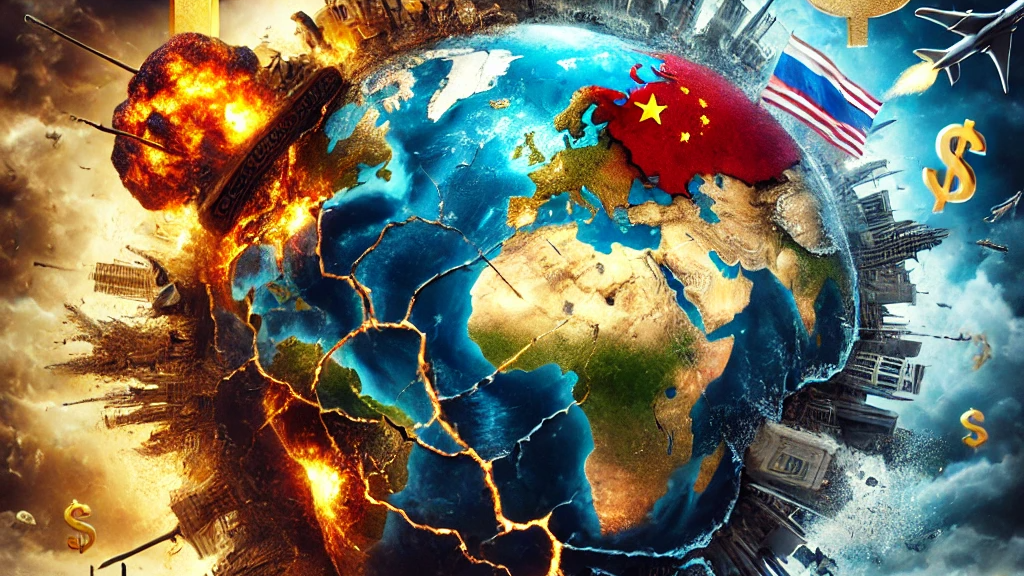
For three decades, globalization was treated as destiny. Borders mattered less, markets merged, and economies intertwined. Today, that era is ending. The world is no longer integrating—it is fragmenting into competing power blocs, driven by security fears, technological rivalry, and strategic mistrust.
This shift is not temporary. It marks a structural transformation of the global order.
🌐 The End of Borderless Economics
Globalization thrived on efficiency and trust. But repeated crises—financial shocks, pandemics, wars, and sanctions—exposed its vulnerabilities. Nations discovered that dependence is not always strength.
As a result, efficiency is being replaced by resilience, and open markets by guarded systems.
🧱 Rise of Power Blocs
The world is reorganizing around dominant centers of power:
-
US-led alliances emphasizing security and shared values
-
China-centric networks focused on infrastructure and trade
-
Regional groupings seeking autonomy and balance
Each bloc is building its own supply chains, standards, and financial systems.

🔌 Technology as the Divider
Technology has become the most visible fault line. Competing digital ecosystems, data rules, and innovation policies are creating parallel worlds that barely intersect.
Once systems diverge, reunification becomes costly and unlikely.
⚔️ Security Drives Economics
Economic decisions are no longer purely economic. Trade routes, investments, and partnerships are filtered through security concerns.
Globalization promised mutual benefit. Fragmentation prioritizes strategic control.
🌍 Impact on Smaller Nations
For developing and middle powers, fragmentation presents both risk and opportunity. They can leverage competition between blocs—but miscalculation can lead to isolation.
Navigating this landscape requires agility, not alignment rigidity.
🔮 A World Harder to Manage
Fragmentation increases instability. Coordination becomes difficult, crises spill across blocs, and misunderstandings multiply.
The global system is becoming less efficient—but more politically charged.
🧠 Final Thought
The age of globalization taught the world how to connect. The age of fragmentation will test whether it can coexist.
The future will not be defined by a single global system, but by multiple power centers competing, cooperating, and colliding.
Globalization unified the world. Fragmentation is redefining it.