
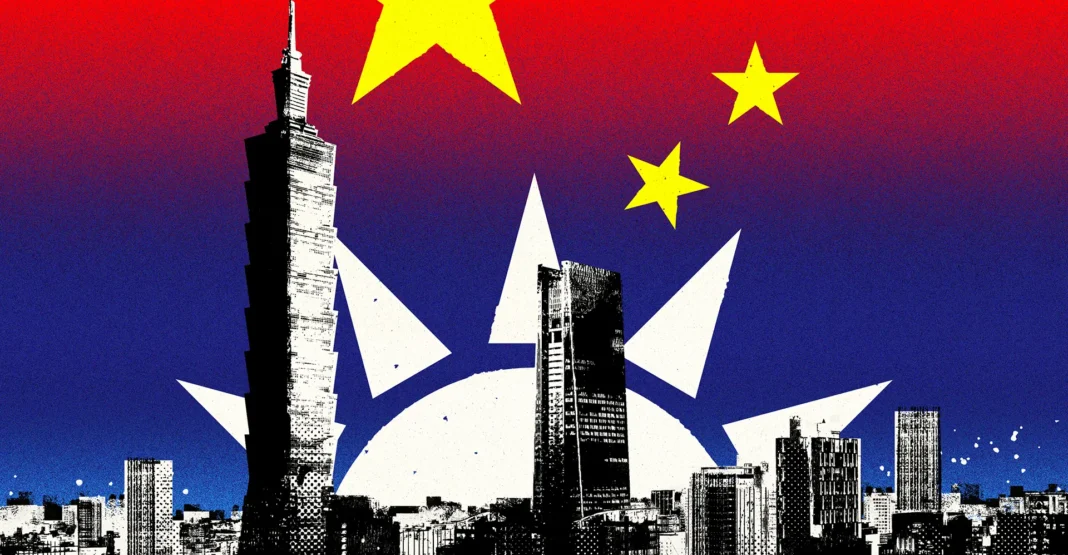
Few places on Earth carry as much geopolitical risk as Taiwan. A self-governed island with immense strategic value, Taiwan sits at the center of intensifying rivalry between global powers. What might appear to be a regional dispute has the potential to trigger a global conflict, pulling in major militaries, disrupting world trade, and reshaping the international order.
Why Taiwan Matters So Much
Taiwan’s importance is rooted in three critical factors:
-
Geographic location in the heart of the Indo-Pacific
-
Advanced semiconductor industry crucial to global technology
-
Symbolic value in the contest between democratic governance and authoritarian control
Control over Taiwan would dramatically shift the balance of power in Asia.
China’s Claim and Strategic Ambitions
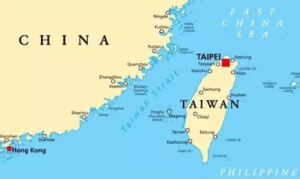
China considers Taiwan a breakaway province and has never ruled out the use of force to achieve reunification. In recent years, Beijing has intensified:
-
Military drills around the island
-
Air and naval incursions
-
Diplomatic pressure to isolate Taiwan internationally
For China, Taiwan is not just territory—it is a question of national legitimacy and regional dominance.
The United States and Strategic Ambiguity
The United States maintains a policy of strategic ambiguity, supporting Taiwan’s defense capabilities without explicitly guaranteeing military intervention.
Washington views Taiwan as:
-
A key partner in regional stability
-
Central to secure supply chains
-
A test case for deterring forceful territorial changes
Any conflict would almost certainly draw the US and its allies into direct confrontation with China.
The Semiconductor Factor
Taiwan is home to some of the world’s most advanced semiconductor manufacturing. These chips power everything from smartphones to military systems.
A conflict over Taiwan would disrupt global technology supply chains overnight, triggering economic shockwaves far beyond Asia.
Regional Allies and Escalation Risks
Japan, South Korea, Australia, and other regional players have growing stakes in Taiwan’s security. Increased military coordination in the region reflects fears that a Taiwan crisis would not remain localized.
The risk lies in miscalculation—a military exercise, blockade, or accident spiraling into full-scale conflict.
Why the World Is Watching Closely
Taiwan represents more than a territorial dispute. It is a flashpoint where:
-
Military power
-
Economic interdependence
-
Ideological competition
all collide. How this issue is handled will define norms around sovereignty and force in the 21st century.
Conclusion: A Small Island, Massive Consequences
Taiwan’s future will shape the global balance of power. A peaceful resolution could stabilize the Indo-Pacific, while conflict could ignite the most serious international crisis in decades.
One island. Multiple powers. Global consequences.