
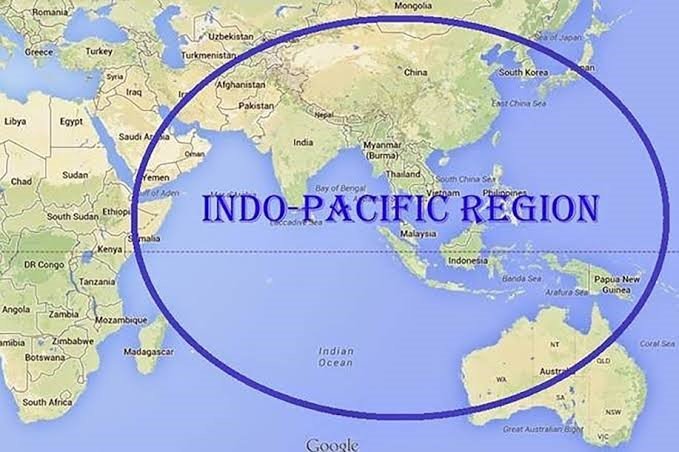
The Indo-Pacific has emerged as the central arena of 21st-century geopolitics. Stretching from the eastern coast of Africa to the western shores of the Americas, this vast region now sits at the crossroads of global trade, military power, and strategic competition. What happens here will not just influence regional stability—it will shape the next world order.
As major powers reposition forces, forge alliances, and contest influence, the Indo-Pacific is rapidly becoming the world’s most decisive geopolitical chessboard.
Why the Indo-Pacific Matters More Than Ever
The Indo-Pacific accounts for:
-
Over 60% of global GDP
-
Some of the world’s busiest sea lanes
-
Key manufacturing and technology hubs
Control over this region means influence over trade routes, energy flows, and supply chains—all vital to global economic stability. Any disruption here has worldwide consequences.
China’s Rise and Strategic Expansion
China views the Indo-Pacific as critical to its long-term security and global ambitions. Through military modernization, island-building in the South China Sea, and expanding naval presence, Beijing aims to secure dominance in its near seas.
Initiatives such as the Belt and Road Initiative (BRI) and strategic port investments further extend China’s influence across the region. These moves have triggered concerns among neighboring states and rival powers, intensifying strategic competition.
The US and Its Alliance Network
The United States considers the Indo-Pacific central to maintaining a rules-based international order. In response to China’s rise, Washington has strengthened partnerships through:
-
Quad cooperation (US, India, Japan, Australia)
-
AUKUS security pact
-
Expanded military deployments and exercises
Rather than direct confrontation, the US strategy relies on deterrence through alliances, ensuring no single power dominates the region.
India’s Growing Strategic Role
India stands at the heart of the Indo-Pacific equation. With its geographic position, growing economy, and expanding naval capabilities, India is increasingly viewed as a balancing power.
New Delhi’s approach emphasizes:
-
Strategic autonomy
-
Maritime security
-
Partnerships without formal alliances
India’s choices will significantly influence whether the region moves toward cooperation or confrontation.
Flashpoints That Could Redefine the World Order
Several unresolved tensions make the Indo-Pacific volatile:
-
Taiwan Strait tensions
-
South China Sea disputes
-
Korean Peninsula instability
Any major conflict in these zones would not remain regional—it would reshape global politics, trade, and security architectures overnight.
A Region Where the Future Is Being Decided
Unlike past power struggles focused on Europe or the Middle East, the Indo-Pacific represents a shift eastward in global influence. Economic power, technological leadership, and military strength are converging here at an unprecedented scale.
The question is no longer whether the Indo-Pacific will shape the future—but who will shape the Indo-Pacific.
Conclusion: The World’s Strategic Center of Gravity
The Indo-Pacific is no longer just a region—it is the strategic center of gravity of global politics. The balance struck here between competition and cooperation will determine whether the world moves toward stability or fragmentation.
In the coming decades, the next world order will not be written in one capital—but across the waters of the Indo-Pacific.