
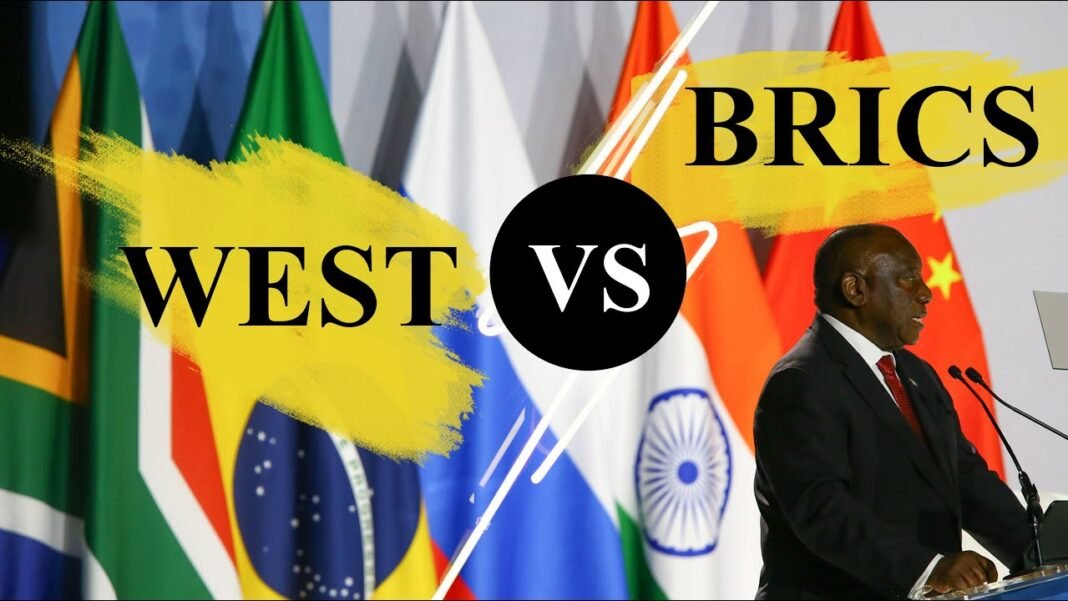
The global balance of power is undergoing a subtle yet profound transformation. As Western-led institutions have dominated world affairs for decades, a growing group of nations is now questioning that order. At the center of this shift lies BRICS, a bloc increasingly viewed as a potential challenger to Western political, financial, and strategic dominance.
What began as an economic grouping has evolved into a symbol of a multipolar world, where power is no longer concentrated in a single axis.
The Expansion of BRICS: More Than Symbolism
Originally comprising Brazil, Russia, India, China, and South Africa, BRICS has expanded to include countries from the Middle East, Africa, and Latin America. These new members share a common motivation: reducing dependence on Western-controlled systems.
For many nations, BRICS membership offers:
-
Greater strategic autonomy
-
Access to alternative financing mechanisms
-
A platform to amplify voices often sidelined in global institutions
The expansion reflects dissatisfaction with the existing global order rather than blind allegiance to a new one.
De-Dollarization: The Currency Question
One of the most debated aspects of BRICS is the push toward de-dollarization. Several member states have openly explored trading in local currencies, aiming to reduce reliance on the US dollar for international transactions.
The dominance of the dollar has long given Washington unparalleled leverage through sanctions and financial controls. By promoting alternative payment systems and currency arrangements, BRICS countries seek to limit Western financial influence.
However, replacing the dollar is no simple task. Stability, trust, and global acceptance remain significant hurdles for any alternative currency framework.
Does BRICS Challenge Western Institutions?
BRICS positions itself as a counterweight to institutions such as the IMF, World Bank, and NATO, which many developing nations perceive as Western-centric. Initiatives like the New Development Bank (NDB) aim to provide financing without the political conditions often attached to Western loans.
Yet, internal differences within BRICS—ranging from economic priorities to geopolitical rivalries—raise questions about cohesion. Unlike NATO or the EU, BRICS lacks a unified security doctrine or enforcement mechanism.
This makes it more of a strategic alignment than a formal alliance.
Can BRICS Really Rival the West?
The answer lies in long-term evolution rather than immediate confrontation. BRICS may not replace Western institutions, but it can reshape global negotiations, dilute unilateral dominance, and give emerging economies greater leverage.
For countries navigating between global powers, BRICS represents choice—a critical factor in a multipolar world.
The future may not belong to one bloc over another, but to a system where multiple centers of power coexist.
A Quiet Shift With Loud Implications
The rise of BRICS signals a world in transition. Not a sudden overthrow of Western dominance, but a gradual rebalancing driven by economic realities, political aspirations, and strategic necessity.
Whether BRICS becomes a true rival or remains a pressure bloc, one thing is clear: the era of unchallenged global dominance is fading.