
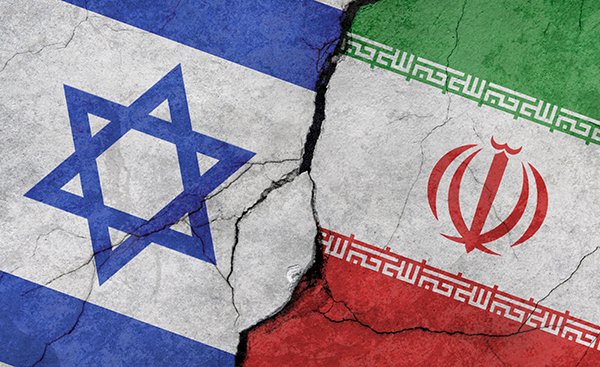
The Middle East is once again standing on a geopolitical fault line. Behind official statements and diplomatic posturing, a silent but escalating shadow war between Israel and Iran is pushing the region closer to a wider conflict than at any point in recent history.
Unlike conventional wars, this confrontation is fought through proxies, cyber operations, covert strikes, and strategic signaling. What makes it especially dangerous today is the collapsing space for diplomacy, rising regional polarization, and the growing risk of miscalculation.
The Proxy Battlefield: Hezbollah, Syria, and Yemen
Iran’s strategy relies heavily on a network of regional proxy forces, designed to encircle Israel and project power without direct confrontation.
-
Hezbollah (Lebanon) remains Iran’s most powerful proxy, armed with tens of thousands of rockets capable of striking deep inside Israel. Cross-border tensions have intensified, raising fears of a full-scale northern front.
-
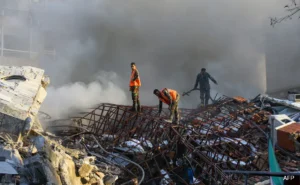
Syria has become a battleground for Israeli airstrikes targeting Iranian military infrastructure, weapons depots, and supply routes. These strikes occur regularly, often without official acknowledgment.
-
Yemen’s Houthi movement, backed by Iran, has expanded its operational reach, threatening global shipping lanes and drawing Israel and its allies into a broader maritime security challenge.
This multi-front pressure strategy leaves little room for de-escalation.
Nuclear Red Lines and the Risk of Direct War
At the core of the Israel–Iran rivalry lies the Iranian nuclear program. Israel has consistently stated that a nuclear-armed Iran is an existential threat, while Tehran insists its program is for peaceful purposes.
As Iran advances uranium enrichment and limits international inspections, Israel’s red lines are being tested. Any perceived move toward weaponization could trigger preemptive Israeli action, potentially dragging the entire region into open warfare.
The absence of a revived nuclear deal has increased uncertainty, making military confrontation more likely than diplomatic resolution.
The Role of the United States: Balancing Deterrence and Restraint
The United States remains Israel’s most important ally, providing military support, intelligence cooperation, and diplomatic backing. However, Washington faces a complex dilemma: deterring Iran without igniting a regional war.
US forces stationed across the Middle East are increasingly vulnerable to proxy attacks, forcing Washington to respond while avoiding escalation. The shadow war has thus become a test of American influence and strategic patience in a rapidly changing region.
Russia and the Gulf States: Strategic Calculations
Russia’s involvement in Syria adds another layer of complexity. While maintaining ties with both Israel and Iran, Moscow seeks to preserve its regional leverage without becoming entangled in a larger conflict.
Meanwhile, Gulf nations—particularly Saudi Arabia and the UAE—are recalibrating their positions. While wary of Iran’s ambitions, they are also pursuing diplomatic engagement to protect economic stability and energy markets.
Oil prices, shipping routes, and regional investments all hang in the balance.
Why This Shadow War Is More Dangerous Than Ever
What makes the current phase uniquely dangerous is the convergence of unresolved nuclear tensions, active proxy conflicts, and declining diplomatic channels. A single misstep—whether a misinterpreted strike or an unexpected casualty—could trigger rapid escalation.
The Israel–Iran shadow war is no longer confined to secrecy. It is shaping global energy markets, regional alliances, and international security calculations.
The Middle East is not just watching history unfold—it is standing on the edge of it.