
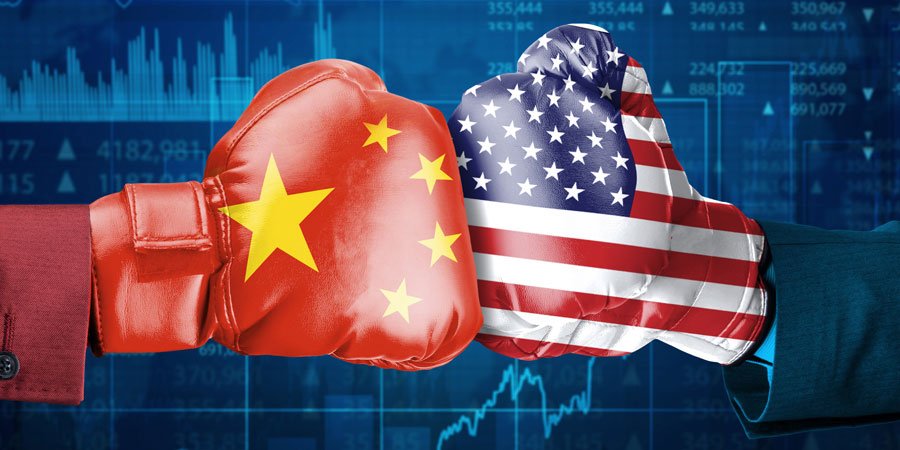
The world is witnessing a new kind of Cold War—one without iron curtains or nuclear standoffs, but driven by technology, data, and supply chains. At the heart of this global power struggle lies the escalating US–China tech rivalry, a battle that is quietly reshaping geopolitics, alliances, and the future world order.
Unlike the 20th-century Cold War, today’s confrontation is fought through semiconductors, artificial intelligence, space dominance, and economic coercion. Control over technology has become control over power.
The Semiconductor War: Silicon Is the New Oil
Semiconductors are the backbone of modern civilization—powering smartphones, weapons systems, satellites, AI models, and electric vehicles. The United States has aggressively restricted China’s access to advanced chips, chipmaking equipment, and manufacturing know-how, aiming to slow Beijing’s technological rise.
China, in response, has poured billions into domestic chip production, treating semiconductor independence as a matter of national security. This “chip war” has global consequences, pulling countries like Taiwan, South Korea, Japan, and the Netherlands into the conflict due to their critical roles in the supply chain.
In the new Cold War, whoever controls chips controls the future.
Artificial Intelligence: The Race for Cognitive Supremacy
AI is no longer just a commercial technology—it is a strategic weapon. From military simulations and surveillance to economic forecasting and cyber warfare, AI superiority offers nations unprecedented leverage.
The US leads in AI research, talent, and foundational models, while China dominates in data volume, state-backed deployment, and rapid commercialization. Both nations view AI leadership as essential to future military and economic dominance.
This race has sparked concerns about AI militarization, autonomous weapons, and global instability—forcing other nations to reconsider their own technological dependencies.
Allies Choosing Sides in a Divided Tech World
The US–China tech battle has fractured the global system into competing blocs. Washington is building a “trusted technology network” with allies through initiatives like CHIPS Act partnerships, Quad cooperation, and NATO tech coordination.
China, meanwhile, is expanding influence through Digital Silk Road projects, offering infrastructure, 5G networks, and AI systems to developing nations.
This division is forcing countries to choose between security alignment with the US or economic integration with China—often at significant political cost.
Impact on India and the Developing World
For India, this tech Cold War presents both opportunities and risks. As companies diversify supply chains away from China, India is emerging as a manufacturing and semiconductor hub. Strategic partnerships with the US, Japan, and Europe are strengthening India’s geopolitical position.
However, developing nations face tougher choices. Aligning with one power can mean losing access to the other’s markets, technology, or funding. The result is a fragile balancing act between growth, sovereignty, and security.
A New Global Order Is Taking Shape
This is not just a rivalry between two superpowers—it is a restructuring of global power itself. Technology has become the primary battlefield, diplomacy the secondary front, and economics the weapon of choice.
The new Cold War will define:
-
Who leads the global economy
-
Who sets technological standards
-
Who shapes the future of governance and security
And unlike the past, there may be no clear end in sight.