

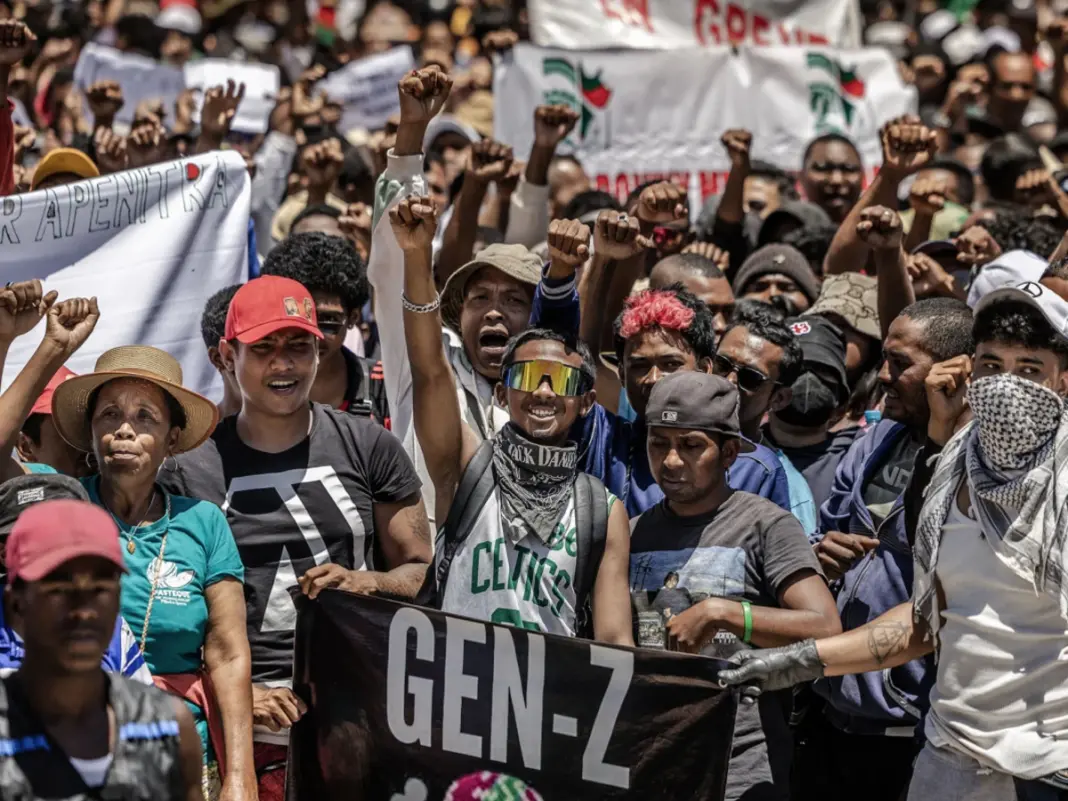
Across multiple continents, the political landscape is undergoing a structural disruption driven not by traditional political parties or union bosses, but by digital-native youth. From Asia and Africa to Latin America, Global Gen Z Youth-Led Demonstrations have crossed a critical threshold. What began in regional pockets as isolated friction over institutional failures, job stagnation, exam leaks, and economic inequality has evolved into a globally interconnected wave of political resistance.
This movement marks a fundamental departure from old-school street activism. Characterized by horizontal leadership, meme-driven mobilization, decentralized organizing, and refusal to align with legacy political establishments, Generation Z is proving to be the most volatile and influential political demographic of the decade.
The Common Blueprint: Why Gen Z Is Rising Simultaneously Across Continents
While local triggers differ across regions, the economic and social underpinnings driving Global Gen Z Youth-Led Demonstrations share striking similarities. Across developing and advanced economies, young people born roughly between 1997 and 2012 find themselves navigating a severe generational disconnect.
First, Generation Z represents the most formally educated generation in human history, yet they are entering a global economy offering far less social mobility than what was available to their parents. Housing costs have far outpaced wage growth, graduate underemployment remains high, and state resources are increasingly directed toward sustaining aging populations and legacy debt.
Second, this generational friction is magnified by social media. Digital networks enable real-time tactical sharing across international borders. When a youth movement in one country deploys a specific digital tactic—whether using decentralized encrypted messaging, satirical branding, or viral live-streaming to counter police narratives—youth movements in other regions adapt and deploy those identical techniques within hours.
Asia: The Epicenter of Systemic and Educational Accountability

In Asia, youth-led agitation has consistently targeted state-run institutional failures and economic nepotism. In South Asia, mass youth movements have challenged entrenched political systems, directly challenging ruling elites over civil service quotas, exam leaks, and systemic corruption.
In India, student dissatisfaction culminated in nationwide demonstrations over paper leaks, administrative secrecy, and the integrity of national entrance examinations. The movement demonstrated the raw power of Gen Z mobilization when a satirical digital campaign—the Cockroach Janta Party—grew into a mass movement that ultimately forced Union Education Minister Dharmendra Pradhan to step down.
Similarly, in Southeast and East Asia, young citizens have continually taken to the streets to oppose administrative overreach, digital surveillance, and attempts by ruling coalitions to insulate themselves from public accountability.
Sub-Saharan Africa and Latin America: Economic Reality and Anti-Corruption Mobilization
Across Sub-Saharan Africa and Latin America, Global Gen Z Youth-Led Demonstrations have taken aim at austerity measures, state corruption, and severe cost-of-living spikes. In nations like Kenya, Madagascar, Peru, and Morocco, young people faced with rising inflation, tax hikes, and youth unemployment rates reaching historic highs rejected traditional party structures.
In these regions, Gen Z protesters refused to rely on traditional opposition figures, whom they viewed as equally compromised by systemic corruption. Instead, they utilized open-source tools to track public spending, map police deployments, and crowdfund legal and medical support for frontline demonstrators. These movements demonstrated that when economic pressures threaten basic survival, young citizens will bypass formal political channels to demand direct accountability.
Decentralized Tactics: Memes, Horizontal Networks, and Real-Time Surveillance
What sets this global wave apart from prior historical uprisings is its tactical architecture. Older movements relied heavily on charismatic figures, formal committees, and central headquarters. Modern Gen Z movements are deliberately leaderless and horizontal.
[Traditional Protest Model]   ➔ Centralized Leader ➔ Formal Demands ➔ Easy Target for Suppression
                                       VS.
[Gen Z Decentralized Model] ➔ Horizontal Mesh   ➔ Viral Memes    ➔ Rapid Adaptive Execution
By operating as a decentralized network without a single figurehead, these movements make it difficult for state authorities to neutralize them through targeted arrests. Humor, internet memes, and satirical branding serve as tactical tools to strip political figures of their authority and keep public morale high under pressure. Furthermore, ubiquitous smartphone live-streaming acts as a real-time counter-surveillance mechanism, documenting law enforcement actions and rendering state-controlled media narratives ineffective.
Why Political Elites Are Misreading the Gen Z Threat

As someone who closely analyzes global governance and civil society trends, I believe political establishments around the world are making a profound strategic error in how they view Global Gen Z Youth-Led Demonstrations. Most governments treat these uprisings as temporary, seasonal outbursts fueled by internet subcultures or foreign influence. They assume that offering a few symbolic concessions, making a cabinet replacement, or deploying digital suppression will force young people to return quietly to their routines.
This is a complete miscalculation. Gen Z is not protesting because of a specific policy tweak or a single bad exam. They are protesting because the fundamental economic and social contract between the state and its citizens has broken down. When an entire generation realizes that working hard, earning degrees, and playing by the rules no longer guarantees housing stability, basic dignity, or a fair shot at a career, the perceived risk of taking to the streets drops to near zero.
Governments cannot repress or out-PR an economic and institutional crisis of this scale. If political leaders respond to youth anger solely with police batons, internet blackouts, or dismissive rhetoric, they will only accelerate institutional breakdown. The resignation of ministers or the scrapping of single bills are mere temporary measures. Unless governments across the globe commit to structural anti-corruption measures, affordable housing, transparent testing, and genuine economic inclusion, this wave of global youth resistance will continue to challenge political regimes worldwide.
Comparative Matrix of Key Global Youth Movements
| Region / Nation | Core Triggers | Primary Tactics | Institutional Outcome |
| South Asia (India) | Exam leaks (NEET-UG), institutional integrity failures | Satirical branding (CJP), Jantar Mantar sit-ins, viral campaigns | Resignation of Union Education Minister, exam security overhauls |
| Southeast Asia (Indonesia/Thailand) | Judicial overreach, economic inequality, political privilege | Flash-mob street rallies, decentralized social media coordination | Forced withdrawal of contested legislation, heightened scrutiny |
| Sub-Saharan Africa (Kenya/Madagascar) | Austerity taxes, utility blackouts, youth unemployment | Open-source budget tracking, Occupy-style assembly, digital fundraising | Cabinet dismissals, suspension of proposed tax frameworks |
| Latin America (Peru/Morocco) | Inflation, government corruption, erosion of public services | Student-led blockades, horizontal strike coalitions | Structural political realignments, cabinet reshuffles |
What Lies Ahead for the Future of Global Dissent
The emergence of Global Gen Z Youth-Led Demonstrations represents a permanent shift in how political dissent operates in the twenty-first century. As these decentralized networks mature, they are building durable organizational structures capable of sustaining long-term political pressure.
For global policymakers, the choice is clear. They can either engage in structural reform to restore intergenerational equity, or face an ongoing wave of political instability led by a generation that refuses to accept a compromised future.
Follow us on instagram @thetejwas.
Also see-