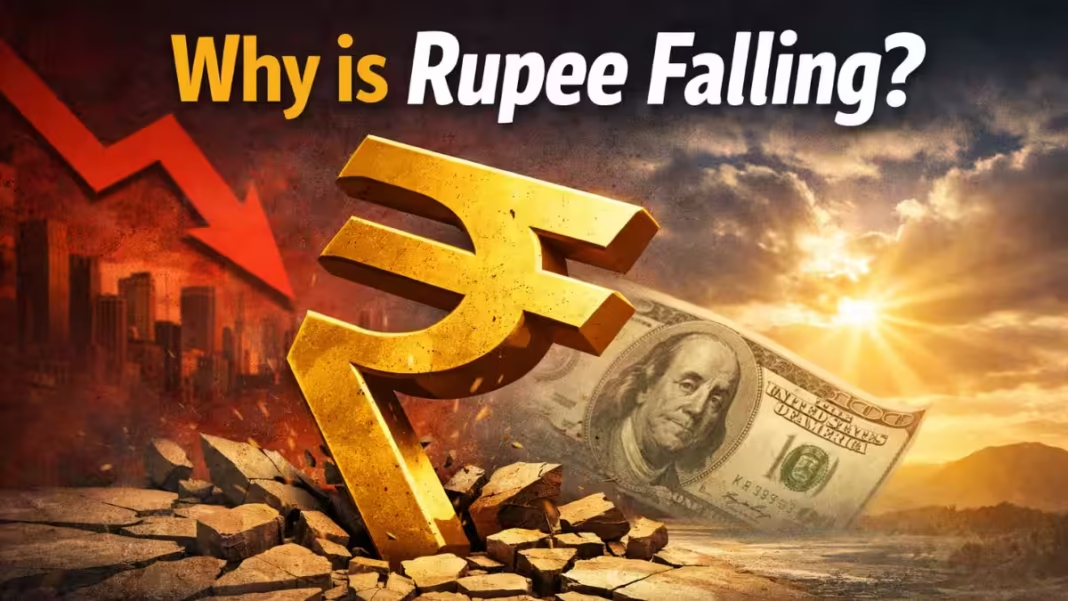

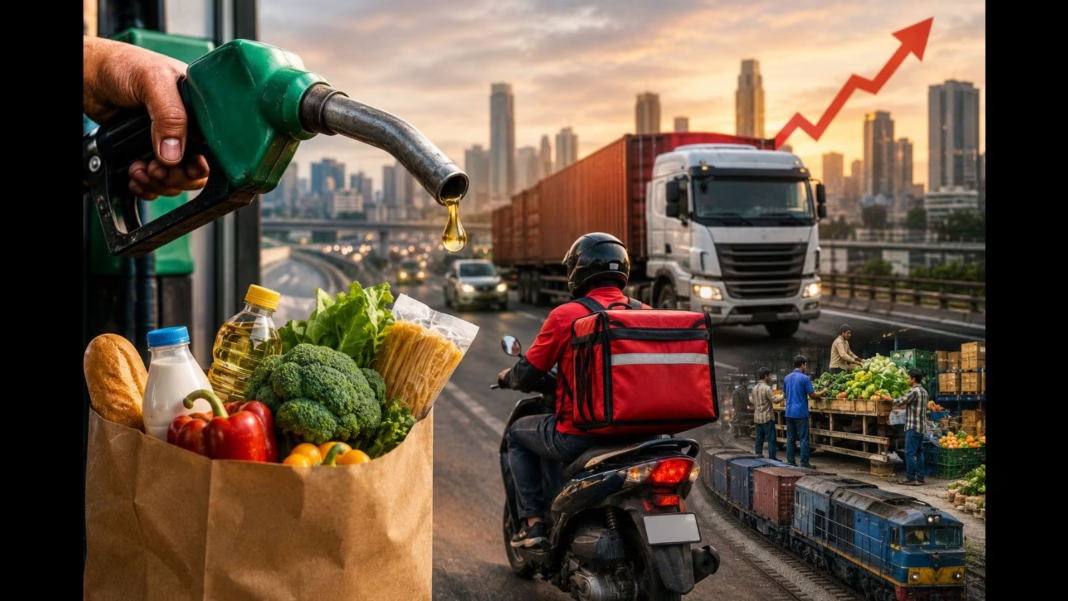
The average Indian family may not follow developments in the Strait of Hormuz every morning. Most people are not monitoring crude oil futures, geopolitical tensions in West Asia, or disruptions in maritime trade routes. Yet, Why Indians May Soon Pay More for Everything is no longer just a headline — it is becoming a serious economic concern that could soon affect millions of households across the country. Over the coming weeks and months, Indians could begin feeling the impact of these global events directly inside their homes — at petrol pumps, vegetable markets, online delivery apps, electricity bills, and monthly grocery budgets.
The world is once again entering a period of deep uncertainty. Rising tensions in West Asia have started shaking global energy markets, triggering fears of supply disruptions and another international oil shock. For a country like India, which imports the vast majority of its crude oil requirements, this is not just an international story. It is an economic warning signal. History has repeatedly shown that when oil prices rise globally, the effects travel rapidly through every layer of the Indian economy.
And this time, the consequences may extend far beyond expensive petrol.
Why Oil Still Controls the Modern Economy
The global economy functions on energy. Oil remains the invisible force powering transportation networks, industrial production, aviation, shipping, manufacturing, logistics, agriculture, and supply chains across the planet. Every truck transporting vegetables, every cargo ship carrying industrial goods, every flight connecting cities, and every factory operating machinery depends, directly or indirectly, on fuel. This is why geopolitical instability in oil-producing regions immediately creates anxiety across financial markets and governments worldwide.
At the center of the current crisis lies the Strait of Hormuz, one of the most strategically important maritime routes on Earth. Located between Iran and the Gulf states, this narrow waterway carries nearly one-fifth of the world’s oil supply every single day. Any military escalation, shipping disruption, or security threat in the region instantly impacts global crude oil prices because international markets fear supply shortages. Even the possibility of conflict is often enough to push prices upward.
For India, this creates a dangerous economic vulnerability.
India’s Heavy Dependence on Imported Oil
India imports more than 85 percent of its crude oil needs from international markets. Unlike countries that possess large domestic energy reserves, India remains heavily dependent on global oil-producing nations to sustain its economic growth. This dependence means that whenever oil prices surge internationally, the Indian economy experiences immediate pressure. Fuel becomes expensive, transportation costs increase, inflation rises, and ordinary households begin paying more for essentials.
Many people still assume that rising crude oil prices only affect petrol and diesel. In reality, oil influences almost every product and service used in daily life. The cost of transporting goods across India depends heavily on fuel prices, especially diesel. Trucks carrying vegetables from farms to urban markets, trains moving industrial supplies across states, and delivery vehicles transporting e-commerce packages all become more expensive to operate when fuel prices rise. Businesses eventually transfer those costs to consumers.
This is how a geopolitical conflict thousands of kilometers away can slowly increase the price of tomatoes in a local Indian market.
How Fuel Prices Quietly Increase the Cost of Everything
The inflationary effect of rising oil prices spreads quietly but aggressively through the economy. When transportation becomes expensive, food prices begin rising because wholesalers and retailers must absorb higher logistics costs. Online delivery platforms increase service charges. Airlines raise ticket prices because aviation fuel becomes costlier. Manufacturing companies face higher production expenses, forcing them to increase product prices. Construction costs rise. Consumer goods become expensive. Over time, the cumulative effect begins affecting every household budget.
Even sectors that appear unrelated to oil eventually feel the pressure. Restaurants spend more on transportation and raw materials. Grocery stores adjust prices due to supply chain expenses. E-commerce platforms increase delivery fees. Public transportation systems face operational pressure. Inflation enters the economy not through one dramatic shock, but through dozens of smaller price increases happening simultaneously.
This is why economists often describe oil as the backbone of modern economic activity.
Why India’s Middle Class Could Face the Biggest Impact
India’s middle class often bears the heaviest burden during inflationary cycles. Wealthier sections of society can absorb temporary increases in fuel or grocery costs without significantly changing their lifestyles. Poorer households, although severely affected, sometimes receive targeted government support through subsidies and welfare programs. The middle class, however, frequently finds itself trapped between rising living expenses and stagnant financial flexibility.
A family already dealing with high EMIs, school fees, healthcare costs, rent, electricity bills, and daily expenses may struggle significantly if another wave of inflation hits the economy. A rise in petrol prices alone affects commuting costs. But when that increase spreads into food inflation, transportation, utilities, and household essentials, monthly financial planning becomes increasingly difficult. Consumer spending reduces. Savings decline. Economic anxiety rises.
For many households, inflation is no longer just an economic issue. It becomes a quality-of-life issue.
Lessons From Previous Global Oil Shocks
India has experienced similar moments before. The oil shocks of the 1970s reshaped global economies and created massive inflation worldwide. More recently, international crude oil volatility after the Russia-Ukraine conflict triggered fuel price spikes across multiple countries. Governments globally were forced to intervene to control inflation, stabilize currencies, and protect economic growth.
Even today, energy prices remain one of the most important indicators influencing global economic stability. Whenever crude oil prices become volatile, investors, central banks, governments, and businesses immediately begin preparing for economic turbulence.
What makes the current situation particularly concerning is the fragile condition of the global economy itself. Many nations are still recovering from pandemic-era disruptions, supply chain instability, high interest rates, and inflationary pressures. In such an environment, another prolonged energy crisis could intensify global financial uncertainty.
The Hidden Threat to India’s Economy
For India, the challenge becomes even more complex because crude oil directly impacts the country’s trade balance and currency stability. When oil prices rise sharply, India spends significantly more on imports. This widens the trade deficit and places pressure on the Indian rupee. A weaker rupee then makes imports even more expensive, creating another layer of inflation.
Economists closely monitor crude oil prices because they influence inflation rates, fiscal policy decisions, industrial growth, and consumer spending patterns simultaneously. High inflation often forces governments and central banks to take difficult decisions regarding taxes, subsidies, and interest rates.
A prolonged oil crisis could therefore impact not just household budgets, but the broader direction of India’s economic growth.
Can India Protect Itself From Another Energy Crisis?
The government does possess several mechanisms to reduce immediate damage. India maintains strategic petroleum reserves designed to provide temporary protection during supply disruptions. The country has also diversified its energy partnerships in recent years to reduce dependence on specific regions. Diplomatic engagement, alternative import agreements, and taxation policies can provide some relief during crises.
However, no major oil-importing economy remains completely insulated from international market shocks.
The larger issue extends beyond short-term price increases. This crisis highlights a deeper structural challenge facing India’s economic future — energy dependence.
As long as India remains heavily reliant on imported crude oil, geopolitical instability anywhere in the world can directly affect domestic economic stability. This is why energy security has become one of the most critical strategic priorities for modern nations.
Why Renewable Energy May Become India’s Biggest Strength
India has already begun accelerating investments in renewable energy, electric mobility, green hydrogen projects, and solar infrastructure. These initiatives are not only environmental decisions; they are long-term economic security strategies. Reducing oil dependence could eventually protect Indian households from the kind of inflationary shocks currently threatening global markets.
Yet, transitions of this scale take time.
In the immediate future, ordinary Indians are more likely to notice rising costs before they notice structural reforms. The first warning signs often appear at fuel stations. Soon after, grocery prices begin climbing. Transportation becomes expensive. Businesses adjust pricing. Online services increase fees. Inflation quietly enters daily life one expense at a time.
Why Global Conflicts Now Affect Every Household

This interconnected reality defines the modern global economy. A military conflict in one region can affect food prices in another continent. A disruption in oil shipping routes can impact transportation costs in Indian cities. International crises are no longer distant geopolitical events observed only by policymakers and analysts. They now shape the financial realities of ordinary families worldwide.
The current West Asia crisis is therefore not merely about diplomacy, military tensions, or global oil markets. It is about how vulnerable modern economies remain to energy disruptions. It is about how inflation can return suddenly even after periods of relative stability. Most importantly, it is about how deeply global events are connected to everyday survival.
The Road Ahead for India
The coming months will determine whether the situation stabilizes or escalates further. If tensions ease, markets may gradually recover and oil prices could stabilize. But if instability intensifies, India may face another serious inflationary phase driven by rising energy costs. Policymakers will likely focus on protecting economic growth, controlling inflation, and preventing excessive pressure on consumers.
However, for millions of households, preparation may ultimately depend on financial discipline and cautious spending.
One reality is becoming increasingly difficult to ignore.
The next inflation shock may not begin inside India. But India could still feel its consequences everywhere.
Final Thoughts
From petrol pumps to grocery stores, from online deliveries to monthly utility bills, the effects of rising global oil tensions may soon become impossible for ordinary Indians to avoid. India’s dependence on imported crude oil makes the country especially vulnerable during international energy disruptions.
As the world enters another uncertain geopolitical chapter, the question is no longer whether the crisis matters to India.
The real question is how expensive everyday life could become if the crisis continues.
From petrol pumps to kitchen budgets — this crisis could affect every Indian.
Stay informed with TEJWAS.
Also see-