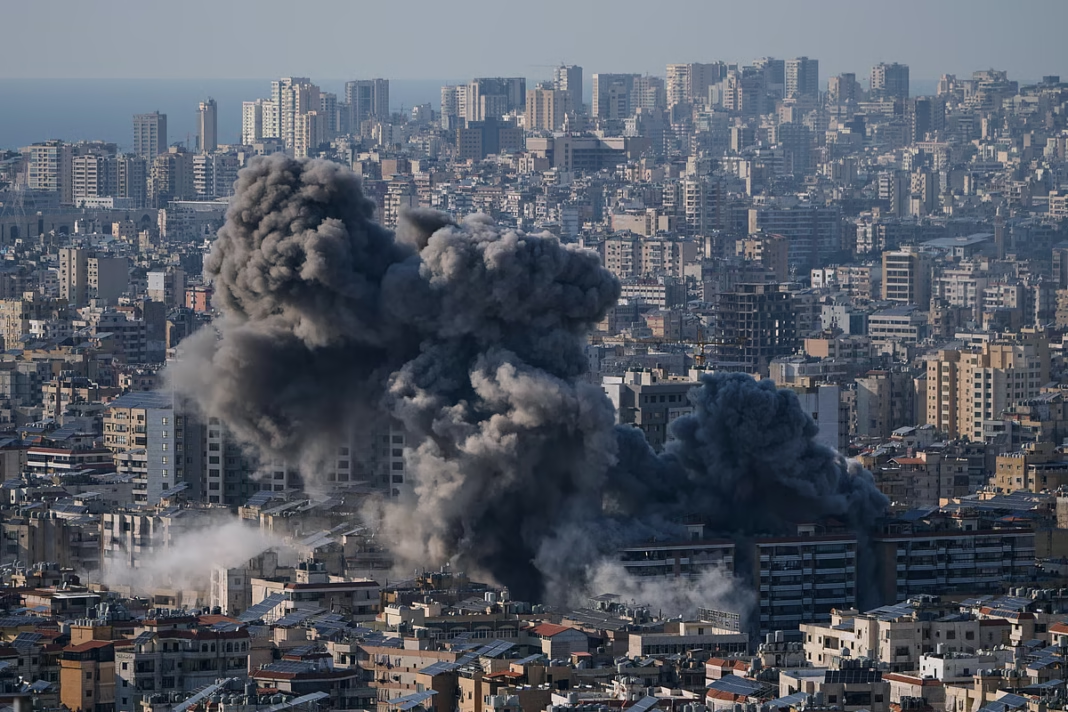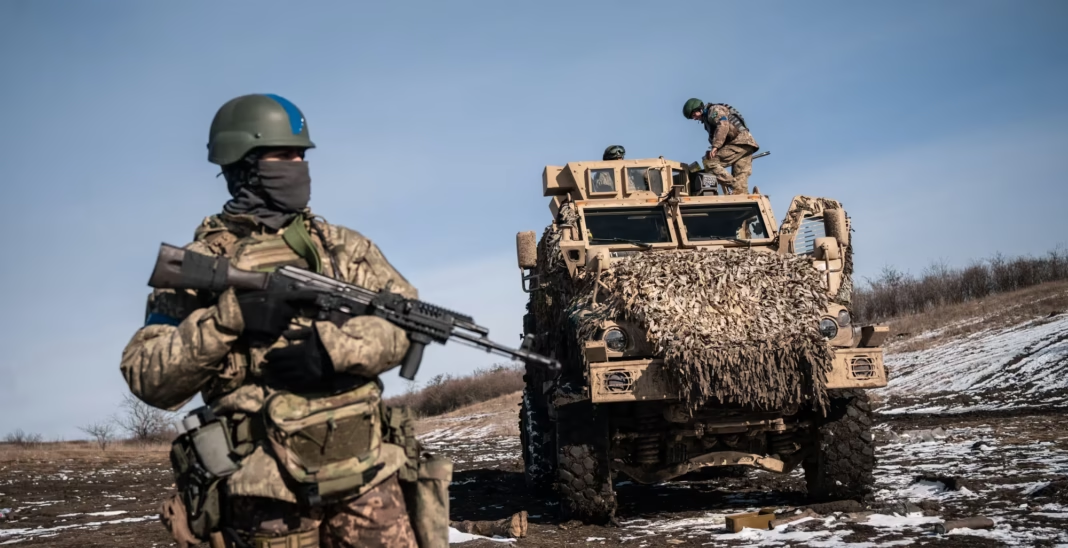


The Return of Chokepoint Warfare is one of the clearest ways to understand the current West Asia crisis. In 2026, the battle is no longer being fought only through missiles, airstrikes, or border tensions. It is also being fought through narrow sea routes that control the movement of oil, gas, cargo, and military leverage. Reuters reports that the Strait of Hormuz, which carries around one-fifth of the world’s oil and large quantities of gas, has become the center of a global shipping crisis after conflict-related attacks and threats disrupted movement through the waterway.
Why Chokepoints Matter More Than Ever
A chokepoint is a narrow route through which massive volumes of global trade must pass. In peacetime, it is a commercial artery. In wartime, it becomes a weapon. The Strait of Hormuz is the perfect example. Reuters reports that the waterway has seen vessel damage, suspended shipments, anchored tankers, and even warnings that ships were not allowed to pass. That changes the role of the sea from a transport route into a pressure point.
The strategic value of chokepoints lies in their asymmetry. A country does not need to defeat a stronger military directly if it can instead threaten the route through which energy and commerce flow. That is why maritime geography now plays such a powerful role in geopolitical conflict.
The Strait of Hormuz Has Become the New Battlefield
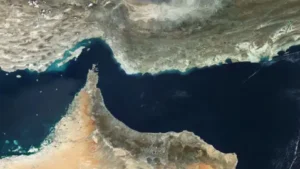
The Return of Chokepoint Warfare is best seen in Hormuz. Reuters reports that after the conflict escalated, oil majors, traders, and tanker owners suspended crude, fuel, and LNG shipments through the strait, while hundreds of ships dropped anchor in and around the Gulf. This did not just disrupt local shipping. It turned the waterway into an active battlefield of deterrence, fear, and economic coercion.
Even countries far from the conflict are being affected. Reuters reports that some vessels have rerouted around the Cape of Good Hope, increasing voyage time, fuel costs, and supply chain uncertainty. This shows how a chokepoint crisis in one region can force the redrawing of shipping patterns across the world.
Sea Power Now Means Economic Power
Modern maritime conflict is no longer only about navies sinking ships. It is about making shipping too risky, too expensive, or too uncertain to continue normally. Reuters reports that war risk insurance premiums in the Gulf surged by more than 1000% in some cases as conflict widened, pushing voyage costs sharply higher. That means the sea route itself becomes a battlefield even when no full naval confrontation is taking place.
This is what makes chokepoint warfare so effective. It weaponizes risk. A tanker does not need to be sunk for global prices to jump. Sometimes the threat alone is enough to change behavior. Shipping slows, insurers panic, traders pause, and energy costs surge. In the modern world, that is strategic power.
Why This Matters to the Entire World
The Return of Chokepoint Warfare matters because the world economy is still built around vulnerable maritime corridors. Reuters reports that disruptions in Hormuz have already trapped roughly a fifth of the world’s oil and liquefied natural gas supplies, while oil markets face one of their biggest crises in decades. That means what happens in a narrow stretch of sea between Iran and Oman can shape inflation, logistics, and political decision-making on multiple continents.
This is also a warning for the future. The logic of chokepoint warfare does not apply only to West Asia. It applies to the Red Sea, the Bab el-Mandeb, the South China Sea, and other strategic maritime routes. Any future conflict involving trade-heavy corridors can quickly become a global economic emergency.
The Bigger Strategic Shift

There is a deeper lesson here. For years, analysts focused on cyberwar, drones, and precision missiles as the defining features of modern conflict. Those matter, but the present crisis shows that geography still rules. A narrow sea route can shape world politics faster than a speech, a sanction, or even a battlefield victory. Reuters reports that Bahrain has even pushed for U.N.-backed action to protect shipping in and around Hormuz, showing how seriously governments now view maritime access as a security issue.
That is why this is not just a shipping story. It is a story about how global power is exercised in the 21st century. Control over movement, uncertainty, and supply has become as important as control over territory.
Final Take
The Return of Chokepoint Warfare explains why sea routes are now the new battlefields. In the current West Asia conflict, the struggle is not only over land, leadership, or ideology. It is also over maritime arteries that keep the global economy alive. When those routes are disrupted, the consequences spread far beyond the war zone. In 2026, the world is being reminded of an old truth with new urgency: whoever can threaten the chokepoint can shake the world.
Follow us on iinstagram @thetejwas.
Also see-