
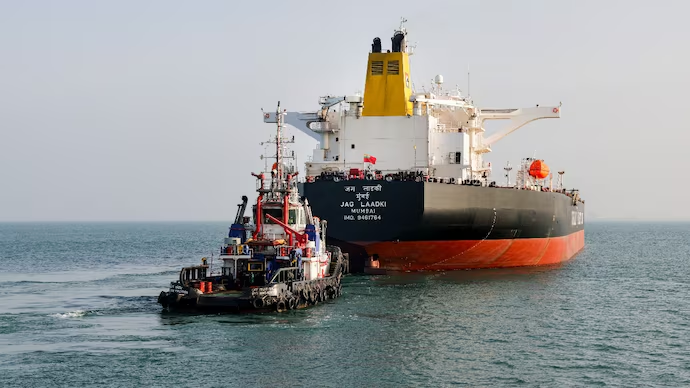
In a surprising development that has caught global attention, seven Russian oil tankers reportedly changed course mid-journey—redirecting from China to India. This sudden shift is not just a logistical adjustment; it signals deeper undercurrents in global energy politics, trade strategies, and geopolitical alignments.
What Exactly Happened?
These tankers, initially believed to be heading toward Chinese ports, altered their routes and are now expected to dock in India. Such mid-sea rerouting is rare and usually driven by urgent economic or strategic factors.
While official confirmations remain limited, maritime tracking data suggests a clear pivot—raising questions about why India suddenly became the preferred destination.
The Real Reason: Price, Demand & Strategy
At the heart of this move lies a simple but powerful driver—economics.
India has emerged as one of the largest buyers of discounted Russian crude since Western sanctions reshaped global oil flows. With competitive pricing and flexible trade arrangements, India offers a lucrative alternative market.
At the same time, China—already a major consumer—may have adjusted its intake due to inventory levels, pricing negotiations, or refining capacities. This creates an opportunity for India to step in and absorb the redirected supply.
India’s Strategic Advantage

India’s growing role in global energy markets is no coincidence. By maintaining a balanced foreign policy and prioritizing economic interests, the country has positioned itself as a key buyer in a fragmented oil market.
This rerouting highlights three major advantages for India:
-
Access to discounted crude oil
-
Strengthening energy security
-
Expanding influence in global trade dynamics
Over the past two years, India has significantly increased imports of Russian oil, refining it domestically and even exporting refined products to global markets.
Russia’s Tactical Shift
For Russia, this move reflects adaptability under pressure. With Western markets restricted due to sanctions, Moscow has increasingly turned toward Asia.
Redirecting shipments mid-route indicates a highly dynamic trading approach, where cargoes are sent wherever demand, pricing, and political conditions are most favorable.
This also underscores how Russia is optimizing its oil exports despite geopolitical constraints.
Where Does China Stand?

China’s role in this equation remains complex. As a major energy consumer, it continues to import large volumes of oil, including from Russia.
However, the rerouting of these tankers could indicate:
-
Temporary demand adjustments
-
Pricing disagreements
-
Strategic inventory management
Rather than a loss, it may simply reflect fluid trade negotiations in a volatile market.
Bigger Picture: A Shifting Energy Map
This incident is more than just a shipping update—it’s a glimpse into the rapidly evolving global energy order.
Traditional supply chains are being rewritten. Oil is no longer just about production and consumption; it’s about strategy, alliances, and real-time decision-making.
The ability to redirect shipments across oceans highlights how flexible and unpredictable modern trade has become.
What Comes Next?
If such rerouting becomes more frequent, we could see:
-
Increased competition between major buyers like India and China
-
Greater volatility in oil pricing
-
More strategic maneuvering by exporters like Russia
For India, this could mean greater bargaining power. For the world, it signals a move toward a multipolar energy landscape.
Final Take
The sudden U-turn of seven Russian oil tankers is not just a maritime curiosity—it’s a clear indicator of shifting global power dynamics.
As nations compete for resources and adapt to changing geopolitical realities, moves like these will become increasingly common. The real question is not why this happened—but how often we will see it happen again.
Follow us on instagram @thetejwas.
Also see-